
The ITB Policy is making an impact across Canada. Below are some examples of Canadian companies and organizations that have benefited from the Policy. Read their stories and be inspired to get involved.
Learn more about the ITB Policy itself.
Recent Stories
Bluedrop Training and Simulation

Building a next generation virtual reality trainer
| Recipient:
Bluedrop Training and Simulation |
| Profile:
An SMB based in Halifax, Nova Scotia, Bluedrop designs and develops advanced training solutions. |
| Description:
Boeing provided financial and engineering support to Bluedrop for the development of a virtual-reality crew trainer for the Boeing V-22 Osprey aircraft. This is Boeing's second R&D project with Bluedrop and it will add a new level of capabilities to Bluedrop's suite of products. |
Calian Advanced Technologies

Putting Saskatoon on the earth observation map
| Recipient:
Calian Advanced Technologies |
| Profile:
Based in Saskatoon, Saskatchewan and formerly known as SED Systems, Calian Advanced Technologies is a global supplier of satellite ground systems. |
| Description:
MDA Space is partnering with Calian Advanced Technologies to deliver advanced earth observation ground stations to the Canadian military. Calian will provide contract management, engineering, software development, integration and testing. The partnership will establish Calian's Saskatoon facility as a key supplier in this market segment and help it pursue other international opportunities. |
Helga Wear

Designing safe and healthy workwear for women in trades
| Recipient:
Helga Wear |
| Profile:
A Vancouver, British Columbia based small business that specializes in the design and manufacturing of innovative and functional apparel for women in trades. |
| Description:
Seaspan contributed to fund R&D into the design of a line of coveralls specifically for women workers' physiology, health and safety. The resulting new product line has allowed Helga Wear to grow its business and expand its market reach to multiple new industries. |
Kognitiv Spark

Bringing mixed reality technology to naval weapons
| Recipient:
Kognitiv Spark |
| Profile:
Kognitiv Spark is a global technology company, headquartered in Fredericton, New Brunswick, recognized for developing its mixed-reality application RemoteSpark™. |
| Description:
Raytheon supported an R&D project to develop mixed and augmented reality technology that would support the maintenance of Canada's new Naval Remote Weapons System. By using the RemoteSpark™ system, the project is supporting Kognitiv Spark's growth and position in an emerging global market. The company will also hire highly-skilled employees and enhance its collaboration with local post-secondary institutes, such as the Spatial Computing Training and Research Lab (SPECTRAL) at the University of New Brunswick. |
Pro Metal Industries

Growing jobs and defence expertise at Indigenous-owned manufacturer
| Recipient:
Pro Metal Industries |
| Profile:
Located in Regina, Saskatchewan, and owned by the Pasqua First Nation Group of Companies, Pro Metal provides precision and custom manufacturing, assembly, and fabrication. |
| Description:
General Dynamics Land Systems – Canada is purchasing a wide range of manufactured components from Pro Metal Industries for integration into its products and systems. Benefits to Pro Metal include strengthened expertise in the defence sector, revenue growth and the creation of over 30 long-term jobs, employing mostly local Indigenous workers. |
Rho-Can Machine and Tool Company

Supporting jobs in the skilled trades
| Recipient:
Rho-Can Machine and Tool Company |
| Profile:
Located in London, Ontario, Rho-Can is a metal machining and fabrication supplier for the automotive, aerospace and military industries. |
| Description:
General Dynamics Land Systems – Canada has selected Rho-Can to supply metal fabrications, machining and industrial equipment for an array of GDLS-C's Light Armoured Vehicle solutions, for Canada and international customers. The partnership reflects Rho-Can's strength in meeting exacting industry standards. The work will mean high-quality employment for skilled welders, machinists, engineers and technicians in Ontario. |
University of British Columbia

Harnessing forest residue for biofuel
| Recipient:
University of British Columbia (UBC) |
| Profile:
Located in Vancouver, UBC is a global centre for research, teaching and learning. |
| Description:
Boeing sponsored UBC to study the viability of producing sustainable fuel from forest residues and the potential to lower the carbon intensity of flying. The study showed that a 71% reduction in carbon emissions could be achieved. UBC trained several graduate students during this project and added to the knowledge base within BC-Smart, the province's decarbonisation community. |
Zeal Motors, Université de Sherbrooke

Designing remotely-operated military vehicles
| Recipient:
Zeal Motors and Université de Sherbrooke. |
| Profile:
Zeal is an SMB located in Cowansville, Quebec that produces the Fat Truck, an industrial off-road utility vehicle. Université de Sherbrooke is a research university in Sherbrooke, Quebec. |
| Description:
Rheinmetall Canada partnered with Zeal Motors to support a team of future engineers at Université de Sherbrooke. The students developed a medical search and rescue prototype vehicle for Rheinmetall, based on the Fat Truck. Benefits to Zeal included hiring new staff and increasing its collaboration with an industry leader. For the students, this was their capstone project towards graduation. They gained valuable industry experience in design and prototyping. |
More stories
Alion Canada (Ontario)
Alion Canada was established in 2007 for the purpose of developing a domestic ship design capability, primarily to support the National Shipbuilding Strategy (NSS). Since then, Alion Canada's parent company, Alion Science and Technology, has invested heavily in growing naval architecture and engineering capability in Canada, increasing the Alion workforce in Ottawa from 2 to 58 employees. Alion is now a world leader in naval design and ship systems integration and is contributing significantly to several NSS projects, including the Joint Support Ships being built by Seaspan's Vancouver Shipyards for the Royal Canadian Navy. Through extensive knowledge transfer from its operations in the United States, Alion Canada has been able to evolve its Canadian engineering capability for domestic and export programs, while also engaging domestically with a number of supply chain participants and academic organizations.
Most recently, Alion also recently announced a significant investment in the University of British Columbia's Naval Architecture and Marine Engineering program to help support an open-water hydrodynamic test facility.
Bronswerk (Quebec)
Bronswerk Group has a long relationship with the Royal Canadian Navy, having supplied Heating, Ventilation, Air Conditioning and Refrigeration Solutions (HVAC-R) for the Canadian Patrol Frigates since the 1980s. By being a leading global provider of HVAC systems, Bronswerk has secured contracts under the National Shipbuilding Strategy (NSS) on both coasts, providing Seaspan and Irving Shipbuilding Inc. with marine-grade HVAC-R systems and equipment. As a result of its contracts with both shipyards, Bronswerk has subcontracted work to more than 30 Quebec-based small- and medium-sized businesses and grown its Canadian operations by 25%. Bronswerk has also entered new markets as a result of its involvement in the NSS; a number of countries have expressed interest in equipment and engineering services, including the United Kingdom, Australia, and the Netherlands.
Carleton University (Ontario)
Developing a Next Generation Flight Training System capability
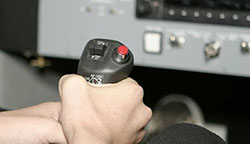
Recipient: Carleton University
Profile: Carleton University is located in Ottawa, Ontario and is known for its Advanced Cognitive Engineering (ACE) Laboratory and Visualization and Simulation Centre.
Description: Carleton University is part of Top Aces' team to build a Next Generation Flight Training System (NGFTS) capability. Students will have the benefit of developing the system and applying the knowledge to other projects both within the University and in their future careers.
Centre for Ocean Ventures and Entrepreneurship (Nova Scotia)
The Marine People Partnership, operating through the Centre for Ocean Ventures and Entrepreneurship (COVE), facilitated a multi-day conference in July of 2018 for 50+ educators from across Nova Scotia on experiential ocean education. The input from the teachers during this conference helped formulate the Taking Making into Classrooms: Ocean Toolkit, a collection of ocean activities for the classroom. Funding for the Marine People Partnership is part of Irving Shipbuilding's Value Proposition commitments under the National Shipbuilding Strategy (NSS). Irving Shipbuilding provided blueprints and instructions so classes could build their very own Arctic and Offshore Patrol Ship (AOPS). The activity will help students understand the work of the engineers, skilled tradespeople, quality inspectors, and project managers who are building six AOPS for the Royal Canadian Navy at Halifax Shipyard as part of the NSS.
Darwin AI (Ontario)
Developing AI solutions for disease detection and screening

Recipient: Darwin AI
Profile: An innovative industry 4.0 company based in Waterloo, Ontario.
Description: Lockheed Martin Aeronautics made a contribution to Darwin AI's unique explainability platform, a rapidly developing field focused on making the decisions process of AI-based systems understandable to humans. Benefits to Darwin AI include partnering with an industry leader, securing resources to further develop its products such as COVID-Net (the company's application to detect and screen Covid 19) and a well-received academic paper published internationally.
LED Smart (Alberta)
With over 25 years of experience, LED Smart, a Canadian small business in Edmonton, Alberta, is at the forefront of advanced LED lighting systems and controls, with dual-use application in defence and commercial areas.
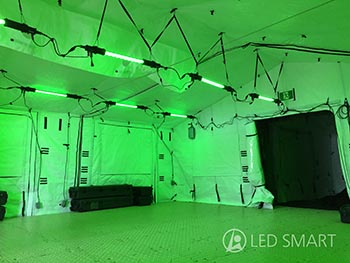 Photo ownership of Desiree Wartenbe/LED Smart
As a result of its ITB obligation on the Headquarters Shelter Systems (HQSS) Acquisition project, Weatherhaven selected LED Smart to develop and provide the specialized tactical lighting, power, and control systems for the HQSS. LED Smart has subsequently applied this technology on specialized lighting solutions for the United States (U.S.) Navy's fleet of military combat and non-combat surface and below-surface seafaring vessels, as well as for the U.S. Army's Next Generation Automatic Test System's shelter. This significant increase in sales and production resulted in LED Smart hiring an additional 36 employees, growing their workforce to 76 personnel. It also resulted in the company opening a brand new state-of-the-art facility in Surrey, British Columbia, for work on specialized LED lighting, controls, artificial intelligence, Internet of Things (IoT), research, development, design, in-house certification, testing, and high-speed production.
MANNARINO (Quebec)
Mannarino Systems & Software (MANNARINO) is a Montréal-based small and medium business (SMB) providing safety-critical systems, software, and airborne electronic hardware engineering services to the aerospace, defense, and space industries.
In 2017, Lockheed Martin signed an Investment Framework Agreement with MANNARINO, as a direct result of its Industrial and Technological Benefits (ITB) Policy obligations on its In-Service-Support contract for the maintenance and support of 17 CC-130J Super Hercules aircraft. This $10M USD agreement represents the largest investment ever made by LM into an SMB in Canada and it enabled MANNARINO to develop and commercialize its own airborne software products.
This ITB investment has helped to create more than 25 new jobs in MANNARINO's head office in Montréal, Quebec; jobs focussed on both engineering research and development and the commercialization of Mannarino's own proprietary real-time operating system (RTOS). As a result, Mannarino has received additional work from multiple companies in the civil aviation industry to provide engineering services and integrate its RTOS on to next-generation avionics products. With the commercialization of its own RTOS, MANNARINO is also the only commercial off-the-shelf RTOS supplier with certification delegation.
Meta Materials Inc. (Nova Scotia)
Advancing solar panel technology in aerospace and defence
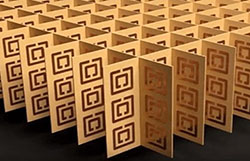
Recipient: Meta Materials Inc.
Profile: Headquartered in Halifax, Nova Scotia, META is a developer of high-performance functional materials and intelligent surfaces. META is pioneering a new class of multi-functional materials which have engineered properties that go beyond what is found in nature.
Description: Lockheed Martin Aeronautics has contributed to a collaborative R&D project to help accelerate the commercialization of META's Rolling Mask Lithography technology into the aerospace and defence industry, for next generation solar applications. There is potential in other growth areas, such as telecommunications, consumer electronics and the automotive market.
Nunavut Arctic College (Nunavut)
With a focus on ocean transportation through Canada's Arctic, the Enhanced Capacity for Oil Spill Situational Awareness and Response (ECOSAR) is one of nine research projects supported by Irving Shipbuilding's $2-million investment in the Nunavut Arctic College. The investment supports nine applied Arctic research projects focused on areas of importance to Canada's Arctic communities and marine industry. The ECOSAR team is led by C-CORE, a not-for-profit research-and-development corporation based at Memorial University in St. John's, Newfoundland and Labrador. C-CORE specializes in research-based advisory services and technology solutions for harsh environments. The project includes work on detecting oil spills through satellite data, and appropriately training local responders.
In August 2018, the ECOSAR team worked closely with the Nunavut Department of Environment to prepare and deliver an oil spill response course in Iqaluit, Nunavut. This workshop was attended by 20 representatives from every region of Nunavut. These representatives became trainers, with the goal of returning to their regions to help build a critical mass of potential responders to oil spills for all Nunavut communities.
Pratt & Whitney Canada (Quebec)
Pratt & Whitney US supported the development of the new Pratt & Whitney Canada Mirabel Aerospace Centre (MAC) for the assembly and test of new engines. The MAC will be responsible for the assembly of the PW800 engine for the next generation of business class jets and the PurePower® PW150G engines for the Bombardier CSeries. The MAC will also feature an engine flight test facility that will house two 747 aircraft that have been retro fitted to conduct flight tests. The test facility will be a global flight test centre for all of Pratt & Whitney's next generation of engines.
The Mirabel Aerospace Centre is a leading, state of the art 300,000-square-foot facility for Pratt & Whitney Canada, a United Technologies Company. It represents a $360 million investment and will employ approximately 300 people within the next five years. The facility is located at the Montreal-Mirabel Airport in Mirabel, Quebec.
The development of this facility is a part of Pratt & Whitney IRB obligation on the purchase of 18 engines for Canada's fleet of C-17 transport aircraft. This IRB activity will generate approximately $108 million in IRB activity, which does not include investments from the Quebec government. This project is an example how the IRB Policy can help ensure high technology work comes to Canada.
Rheinmetall Canada (Quebec)
Rheinmetall Canada operates a large facility in St-Jean-sur-Richelieu, Quebec, where it manufactures and services a variety of advanced weapon and defence systems. The IRB Policy has been an important factor in the company's success and growth over the years.
First, the Quebec facility (originally owned by Oerlikon Contraves) was established as an IRB activity itself, as part of the Air Defence Anti-Tank System (ADATS) project won by Oerlikon in 1986. Over the years, the company developed a strong knowledge of the Canadian procurement process and requirements, in part through performing long-term in-service support on the ADATS .
Oerlikon Contraves was sold to the Rheinmetall Group in 1999. Since then, the Rheinmetall Group has won several military contracts with the Canadian government, including the Halifax Class Modernization Shield Replacement, Close Area Suppression Weapon and the Repair and Overhaul of the 42 Leopard 2 A4 Training Tanks. In each case, Rheinmetall Canada successfully leveraged the IRB Policy as part of its business case to secure technology transfer and major parts of the work share from its parent companies. This work has helped diversify its product base, promote long-term job and financial stability and position Rheinmetall Canada for future growth.
TC Energy (Alberta)
TC Energy is a major North American energy company, based in Calgary, Alberta, that develops and operates energy infrastructure across Canada, the United States, and Mexico.
TC Energy and Lockheed Martin entered into an agreement in 2019 to identify and develop large-scale, long duration energy storage projects using Lockheed Martin's GridStar® Flow technology; the first project of which is the Saddlebrook Solar + Storage Project, located in Aldersyde, Alberta. The facility is expected to consist of a ~400 acre solar generating facility, and Lockheed Martin's GridStar® Flow Energy Storage System (ESS), to provide a dispatchable source of clean energy to Alberta's electric power grid. It will be one of the first and most substantial large-scale solar and flow battery projects in Canada and is expected to provide up to 102.5 megawatts (MW) of solar power — enough electricity to power approximately 30,000 homes.
The project includes the research expertise in sustainable electrical energy systems from the University of Calgary. The University supports the project through the development of ESS modeling to increase the efficiency of power dispatching during times of lower solar activity. A team of professors and graduate students from the Schulich School of Engineering leads this effort.
Lockheed Martin is providing an investment of $11.3 million to this collaborative research partnership to support its Industrial and Technological Benefits (ITB) obligations on the Tactical Airlift Capability project. This is an excellent example of how the ITB Policy can leverage defence procurement to support innovation and collaborative research around clean technology capabilities. Contributions from Lockheed Martin and TC Energy will create over 100 jobs in Southern Alberta and the project is expected to reduce GHG emissions by up to 115,000 tonnes per year.
This innovative project has also been awarded $10 million in funding through Emissions Reduction Alberta's BEST Challenge, a funding opportunity supporting Biotechnology, Electricity, & Sustainable Transportation projects.
Terrestrial Energy (Ontario)
Supporting advanced nuclear power plant design

Recipient: Terrestrial Energy
Profile: Based in Oakville, Ontario, Terrestrial Energy is a technology company developing a Generation IV advanced nuclear plant design, aimed at delivering clean, low-cost and reliable energy.
Description: L3Harris MAPPS contributed simulation software and training that will support Terrestrial Energy in the design of its technology, by providing a responsive simulation environment. For Terrestrial Energy, this partnership represents a long term collaboration with a leader in nuclear power plant simulation technology.
University of Manitoba (Manitoba)
Establishing an advanced satellite research facility

Recipient: University of Manitoba (UM)
Profile: Located in Winnipeg, UM is one of Canada's oldest universities and a top research institution.
Description: Magellan Aerospace contributed to the establishment of an Industrial Research Chair in satellite development and the opening of the Advanced Satellite Integration Facility (ASIF). The successful initiative is providing the opportunity for UM researchers to investigate, construct and test satellite systems and equipment - a unique capability in a state-of-the-art facility.


