
Audit and Evaluation Branch
October 2025
Table of contents
Program context
Program overview
In June 2019, the Government of Canada released Canada's Connectivity Strategy, with the objective of connecting Canadians to Internet speeds of at least 50/10 Mbps (megabits per second) no matter where they live, as there is a significant connectivity divide between urban and rural Canada.
In 2018, only 41% of rural households had access to high-speed Internet at 50/10 Mbps, compared with 98% of urban homes, limiting their ability to participate in the digital economy and their potential for economic development.
As part of Canada's Connectivity Strategy, the $3.225 billion Universal Broadband Fund (UBF) was launched on November 9, 2020. Combined with other federal, provincial, territorial, municipal, and private sector investments, the UBF has been working toward ensuring that all Canadians households have access to high-speed Internet to participate in the digital world. It was designed with the flexibility to meet the needs of rural and remote communities across Canada, including Indigenous communities, to ensure these communities remain strong and resilient.
The UBF builds on other broadband programs delivered by ISED such as its predecessor Connect to Innovate (CTI), which primarily supported "backbone" infrastructure to connect institutions like schools and hospitals, as well as other federal investments, and seeks to maximize progress towards connecting all Canadian households with affordable, reliable, high-speed Internet.
Core stream
The core stream was designed to support projects that extend or enhance household access to high-speed Internet services in areas with speeds less than 50/10 Mbps. While there is no specific funding cap for core stream projects, the maximum amount of funding that an applicant can request for a broadband project is up to 75% of the total eligible costs for underserved households. For underserved Indigenous households and communities which are satellite-dependent or in very remote areas, such as those without year-round road access, the program contribution limit is up to 90% of total eligible costs.
The core stream also includes High Impact Projects, which target households, over a large geographic area that leaves no household underserved. They may also have a business case that makes sense to involve a partner like the Canada Infrastructure Bank, which offers low-cost loans for broadband projects.
Rapid Response Stream
The objective of the Rapid Response Stream (RRS) was to improve household access to high-speed Internet as quickly as possible, by funding shovel-ready projects. This helped address immediate broadband needs in response to the COVID-19 pandemic.
The RRS allocated funding of up to $5 million to projects that could be completed quickly in rural and remote areas where Internet service speeds have not yet reached 50/10 Mbps.
Mobile stream
Up to $50 million was set aside to fund mobile projects that primarily benefit Indigenous peoples. Funded mobile projects have extended 4G LTE coverage or better mobile services to unserved areas. Projects must target Indigenous communities, roads within or leading to Indigenous communities, or highways and roads where the deployment of mobile network coverage would benefit Indigenous peoples.
Program delivery
The UBF has been providing non-repayable contributions directly to applicants with approved projects. These projects target areas where there is currently no business case for the private sector to expand or upgrade broadband infrastructure on its own.
ISED assessed projects for their technical merit, project management and financial profile. It also used assessment methods and criteria that objectively demonstrate that only underserved households without access to Internet connection speeds of 50/10 Mbps are the primary beneficiaries of this program.
The UBF is part of a suite of federal broadband programs that are all working together to bridge the digital divide. ISED acted as the broadband Centre of Expertise. Coordination among federal programs was important to ensure that funds were used to connect as many Canadians as efficiently as possible, while limiting overbuild between them.
ISED developed a comprehensive coordination framework in consultation with various federal government and non-government entities who provided funding for broadband (ISED, Infrastructure Canada, Canadian Radio-television and Telecommunications (CRTC), Indigenous Services Canada (ISC), and the Canada Infrastructure Bank (CIB) – see Appendix B). Parties to the framework meet regularly to share information on respective programs, discuss potential co-funding of projects, and/or review projects of mutual interest. ISED gathers data from all parties quarterly to track progress toward the government's connectivity targets, and maps projects to minimize overbuild.
The UBF program has prioritized co-funding projects and has established Memorandums of Understanding (MOUs) with six provinces and territories. Funding for UBF projects is available until March 31, 2027.
Figure 1: Progress on % of households with access to 50-10 Mbps Internet speeds

Progress on % of households with access to 50-10 Mbps Internet speeds
- 2016: 84.5%
- 2017: 84.6%
- 2018: 86.0%
- 2019: 87.9%
- 2020: 90.0%
- 2021: 91.6%
- 2022: 94.1%
- 2023: 95.8%
Program funding
- 2019: $1 billion. Budget 2019 committed $1 billion for the UBF
- 2020: $1.75 billion. Due to additional urgency for connectivity created by the COVID-19 pandemic, the UBF received another $750 million by program launch (November 9, 2020).
- 2021: $2.75 billion. The UBF received a further $1 billion through Budget 2021 to help the program leverage provincial partnership opportunities
- 2022: $3.225 billion. The UBF received a top-up of $475 million in the Fall of 2022 to accelerate Canada's progress towards the government's connectivity commitments, while ensuring regional equity
Evaluation context
An evaluation of the UBF is required in accordance with the Financial Administration Act and the Treasury Board Secretariat Policy on Results.
- The objective of this evaluation was to assess the design and delivery, relevance, performance and efficiency of the UBF, including the extent to which the CTI has achieved its targeted intermediate outcomes
- The scope of the evaluation included all activities of the UBF. The evaluation covered the period from November 9, 2020, to March 31, 2024
- The evaluation was conducted by the Audit and Evaluation Branch at ISED. A results-based approach was used to examine the achievement of expected outcomes for the UBF, as identified in the logic model (Appendix C)
Evaluation methodology
The following lines of evidence were used (details in Appendix D):
- Document and literature review
- Program administrative and performance data review
- Case studies
- Online survey of UBF recipients
- Virtual interviews
Evaluation questions
Relevance
- To what extent was there a demonstrable need for the UBF?
Performance
- To what extent were potential applicants aware of the UBF program requirements?
- To what extent did eligible UBF applicants submit quality applications?
- To what extent was scalable infrastructure being funded through broadband infrastructure projects (i.e., speeds beyond 50/10 Mbps)?
- To what extent have rapid response stream projects offered improved Internet access (e.g., faster speeds, higher capacity, improved affordability)?
- To what extent have high impact projects that will bring 50/10 Mbps service to households in rural and remote areas been funded?
- To what extent has the UBF made early progress towards achieving its intermediate and ultimate outcomes?
- To what extent did the CTI Program achieve its targeted intermediate outcomes?Footnote 1
Efficiency
- To what extent is the UBF delivery model an efficient and effective approach for extending or enhancing household access to high-speed connectivity?
- What are the key lessons learned in terms of program delivery?
The evaluation produced 13 findings, supported by multiple lines of evidence, and led to two recommendations.
Findings
Finding 1
At the launch of the UBF, rural and remote communities lacked adequate broadband access, with service levels far below the 50/10 Mbps standard, and the Internet is characterized by slower speeds, less availability, and higher costs. A need for government intervention was confirmed because connecting these communities was not economically viable for ISPs.
Evolution of gaps in underserved areas
There are three types of digital divide with respect to broadband access:
- Coverage and access: Accessibility to the Internet and information and communications technology (ICT) devices or the lack thereof.
- Internet skills and usage: Inequality in the ability to use ICT among those who have access.
- Outcomes of Internet use: Differences in beneficial outcomes because of a lack of access to online health, education, government and other services.Footnote 2
Since the initial rollout of broadband to larger communities in the early 2000s, rural and remote areas have lagged urban areas.Footnote 3 Rural, remote, and Indigenous communities in Canada have lacked adequate broadband access, with service levels below the 50/10 Mbps standard. A connectivity gap has also existed between Indigenous and non-Indigenous communities. Internet in rural and remote regions has been characterized by slower speeds, less availability, and higher costs.Footnote 4
There has also been significant regional variation, with provinces with more rural and remote populations having lower levels of connectivity,Footnote 5 and northern regions and territories having particularly poor connectivity.Footnote 6
Need for financing of broadband projects in rural and remote areas
A need for government intervention was confirmed to ensure that all Canadians can realize the economic and social benefits of connectivity.Footnote 7 It is not economically viable for Internet service providers (ISPs) to invest in infrastructure to connect rural and remote communities.Footnote 8 The sparse populations result in significantly higher capital costs per household and less competition, as service providers are often unwilling to enter these low-profit markets.Footnote 9
Rural and remote areas face deployment challenges such as short build seasons and challenging terrain, making the areas difficult to access and build infrastructure.Footnote 10 A variety of additional barriers such as difficulties accessing fiber transport networks and support structures such as poles and towers, and a lack of local personnel and contractors to construct and maintain infrastructure.Footnote 11
Low-quality connectivity severely limits economic opportunities and exacerbates challenges faced by rural areas such as a stagnant workforce, low levels of innovation, and out-migration of young people.Footnote 12 The provision of adequate broadband infrastructure is associated with GDP growth and better socio-economic outcomes.Footnote 13 For example, a World Bank analysis of 120 countries showed for every 10% increase in the penetration of broadband services, there is an increase of 1.2% in per capita GDP growth.Footnote 14
Low-quality connectivity also limits access to education and healthcare, which increasingly depend on digital technologies. The negative impacts of underservice on education and healthcare were particularly severe during the COVID-19 pandemic, with rural communities facing significant challenges accessing online learning and health care services.Footnote 15
Incremental need for UBF Funding
The majority of surveyed recipients (63%) indicated they would not have proceeded with their project without UBF funding (see chart below).
The surveyed recipients and interviewees noted that if the projects had still gone forward without UBF funding, they would have been subject to delays, and some would have sought other federal, provincial/territorial (P/T), and/or private sector funding.
About one-third of recipients said they would have delayed their project in the absence of UBF funding, with an estimated delay of 4.5 years. A greater share of large and medium ISPs said they would have delayed their project, and the estimated delay was also longer.
Most recipients surveyed indicated that the receipt of UBF funding was the primary or only reason for undertaking their projects.
Figure 2: Importance of UBF funding

Importance of UBF funding
Most recipients surveyed indicated that the receipt of UBF funding was the primary or only reason for undertaking their projects.
- The only reason for undertaking the project(s): 29% of respondents
- The primary reason for undertaking the project(s): 60% of respondents
- A minor reason for undertaking the project(s): 7% of respondents
- Not a reason for undertaking the project(s): 4% of respondents
Figure 3: Impact on broadband project implementation in the absence of UBF funding

Impact on broadband project implementation in the absence of UBF funding
Without UBF funding, recipients would have:
- Not proceeded at all
- All organisations: 63% of respondents*
- Small ISPs (1-99 FTEs): 67% of respondents
- Medium and Large ISPs (99-500+ FTEs): 77% of respondents
- Delayed expansion
- All organisations: 36% of respondents
- Small ISPs (1-99 FTEs): 35% of respondents
- Medium and Large ISPs (99-500+ FTEs): 58% of respondents
- Sought provincial/territorial funding options
- All organisations: 26% of respondents
- Small ISPs (1-99 FTEs): 13% of respondents
- Medium and Large ISPs (99-500+ FTEs): 38% of respondents
- Sought other federal government funding options
- All organisations: 25% of respondents
- Small ISPs (1-99 FTEs): 19% of respondents
- Medium and Large ISPs (99-500+ FTEs): 35% of respondents
- Used own source of funds
- All organisations: 18% of respondents
- Small ISPs (1-99 FTEs): 22% of respondents
- Medium and Large ISPs (99-500+ FTEs): 4% of respondents
- Sought private sector funding options
- All organisations: 11% of respondents
- Small ISPs (1-99 FTEs): 15% of respondents
- Medium and Large ISPs (99-500+ FTEs): 4% of respondents
- Increased price of product offerings to offset upgrades or new services
- All organisations: 6% of respondents
- Small ISPs (1-99 FTEs): 9% of respondents
- Medium and Large ISPs (99-500+ FTEs): 8% of respondents
All organizations includes small and medium ISPs, as well as municipality/township/county organizations, Indigenous organizations, and not-for-profit organizations.
Finding 2
Responsible for Canada's 2019 Connectivity Strategy, ISED plays a key role in facilitating ecosystem partnerships and focusing federal government efforts to address connectivity challenges in a consistent manner. As a key program under the Connectivity Strategy, the UBF contributed to the facilitation of effective partnership activities and coordination with P/Ts and other government departments, thereby mitigating duplication and overlap.
Need for ecosystem partnerships and ISED's role within the broader connectivity landscape
The literature review indicated that there is a need for ecosystem partnerships in broadband infrastructure development, especially in rural and remote areas. These partnerships facilitate resource sharing, enhance local capacity, help align policies, mitigate project risks, and help tailor projects to meet the unique needs of rural and remote areas, thereby contributing significantly to the effectiveness of broadband projects.
Common objectives and priorities help focus efforts and allow governments to address connectivity challenges in a consistent manner. Multiple federal organizations have an interest in broadband Internet connectivity or have programs where it is an eligible funding category, and so coordination is key to ensure that federal expenditures maximize broadband access.
ISED has overall responsibility for Canada's 2019 Connectivity Strategy and for ensuring that the Strategy's goals are met. The Department also leads whole‑of‑government reporting on the suite of federal connectivity initiatives. ISED is also responsible for supporting access to the Internet, setting legislative and policy frameworks, and managing spectrum frequencies efficiently and effectively to maximize public benefits.
As a key program in the delivery of Canada's Connectivity Strategy, ISED's UBF plays a critical role in facilitating partnerships and coordination with the other ecosystem partners, such as the provinces and territories and the other government departments delivering programs under Canada's Connectivity Strategy.
Coordination and duplication of broadband programming
The majority of recipients surveyed (64%) found that the UBF facilitated effective partnership activities to a moderate or significant extent. Medium and large ISPs were slightly more likely (77%) to perceive that the UBF facilitated effective partnership activities.
Figure 4: Effectiveness of UBF's facilitation of partnership activities

Effectiveness of UBF's facilitation of partnership activities
| Level of Satisfaction | All Organizations | Small ISP (1-99 FTEs) | Medium and large ISPs (100-500+ FTEs) |
|---|---|---|---|
| To a significant extent | 33% of respondents | 38% of respondents | 32% of respondents |
| To a moderate extent | 31% of respondents | 23% of respondents | 45% of respondents |
| To a small extent | 19% of respondents | 15% of respondents | 9% of respondents |
| Not at all | 17% of respondents | 23% of respondents | 14% of respondents |
Interviewees agreed that ISED was effective in avoiding duplication and coordinating with P/Ts and other government departments (OGDs). There was regular coordination with the P/Ts from the time of application to the monitoring phase of projects and UBF officials regularly met with P/T representatives (weekly, monthly, or quarterly) to share documentation, analysis and balance workloads between staff. ISED also signed MOUs with six provinces (QC, ON, AB, BC, NF, PEI) outlining guiding principles for roles and responsibilities. In addition, ISED worked to optimize connectivity investments with P/Ts without MOUs. P/T officials agreed that there was good information sharing and talking through solutions with ISED staff via regular communication touchpoints, and that staff were very helpful and responsive.
Interviewees said there was regular information sharing and touch points between ISED and OGDs (e.g., monthly meetings with the CIB and CRTC), although the nature of information sharing tended to differ by department (e.g., ISED and CIB discuss projects at the bidding and closing stage, whereas ISED and CRTC share connectivity data and status updates (they do not discuss the details of applications which have been submitted and are under their respective review processes)).
Interviewees identified lessons learned and areas for improvement
- Collaboration with OGDs: Earlier engagement to enhance coordination of project funding (Indigenous Services Canada); harmonization of application processes (CRTC); and more collaboration during construction phase (Canada Infrastructure Bank)
- Collaboration with P/Ts: Increased leveraging of the provincial partnerships (i.e., distributing more work with the P/Ts, such as having them run the intake process) and earlier and more frequent engagement with P/Ts (e.g., development of the Statements of Work)
- Collaboration tools and data sharing: Greater collaboration on tools and resources (e.g., application intake tool) and improved data sharing and collection capabilities
Case study highlight
Case study interviewees for one recipient project found that the effort was divided effectively between the provincial and federal governments and there was minimal duplication.
It was felt that the UBF was collaborative, open, and transparent. It was felt that the collaboration worked well, there were no issues, and claims were coordinated to ensure stacking limits were respected.
There were regular meetings with provincial program officials, who participated in all project phases. When issues arose, such as projects having difficulties with permitting, more regular meetings were held between ISED and the province, to identify and address these issues.
Finding 3
Recipients and other stakeholders were satisfied with the tools and support provided by the UBF, although satisfaction was somewhat lower among smaller ISPs. Many of these applicants used the Pathfinder services, but awareness of these services was low among recipients surveyed.
UBF developed tools to help applicants
- National Broadband Internet Service Availability Map
- Eligibility Mapping Tool: A mapping tool designed to help applicants design their UBF project
- ISED Broadband Connection: A new secure applicant portal
- Document Checklist: A list of the required documents applicants must provide
- Frequently Asked Questions: provides answers to common questions
- Application Guide: Outlines program eligibility and application requirements
- Pathfinder: Support services to help organizations with the application process
UBF received a large volume of applications
| Province | Applications | Funded projects | % Funded |
|---|---|---|---|
| Alberta | 961 | 95 | 10% |
| British Columbia | 634 | 75 | 12% |
| Ontario | 615 | 179 | 29% |
Pathfinder services were developed to help applicants
Building on previous programs (i.e., the Connect to Innovate and Connecting Canadians programs), the UBF created a Pathfinder service to help applicants needing more support to develop their projects, build partnerships, find sources of funding, and navigate the application process. This service was meant to help support the needs of smaller clients such as municipalities or Indigenous groups, who may not have had the same expertise or capacity as large ISPs.
The service included a phone support line and email contact to connect with ISED staff to explain program requirements, provide guidance on developing their proposal, and help identify any additional support they require (e.g., technical, financial, etc.). Webinars were also developed on various aspects of the UBF, held live and posted online. The service also provided information and support to connect applicants with other available broadband funding programs.
Applicants made use of UBF webinars
The UBF met its target to have at least 100 participants attending six technical webinars. These included various topics to help with the completion of applications such as Developing Projects in Indigenous Communities, Understanding Key Comparative Assessment Criteria, and Accessing the UBF Application Portal.
Figure 5: Webinar participation

Webinar participation
- Number of webinars: 18 held
- Webinar target: 6
- Number of webinar participants: 993
- Webinar participant target: 100
UBF sent updates to keep stakeholders informed
The UBF sent updates to stakeholders with information on application deadlines and other key process information. The UBF met its initial target of at least 5 program updates sent to at a minimum 1,000 stakeholders by January 31, 2021, with 5 program update e-blasts sent to 1,460 stakeholders (largely ISPs) and another 4 sent by March 31, 2021.
Half of UBF applicants used the Pathfinder services
53% of UBF applicants consulted Pathfinder services (143 of 269 applicants), according to program data. Applicants submitted 2,311 inquiries, consisting of emails, letters, and phone calls. Small ISPs represented a larger source of inquiries (36%) compared to large ISPs (4%).
Figure 6: Source of Pathfinder service inquiries
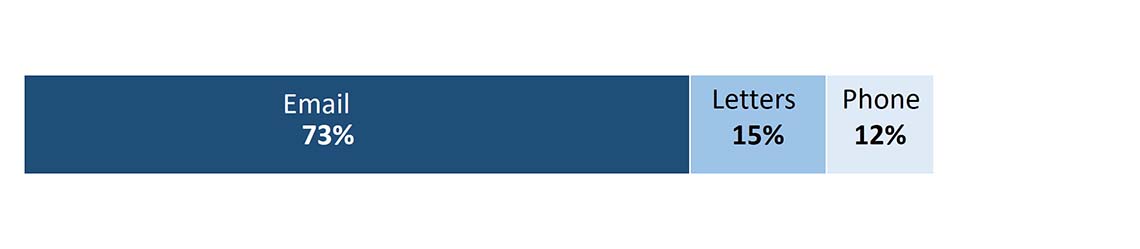
Source of Pathfinder service inquiries
- Email: 73%
- Letters: 15%
- Phone: 12%
There was low awareness of Pathfinder services
Only a minority of funding recipients surveyed were aware of the Pathfinder services (42/124). Further, only a small portion (9/42) were aware that they had used the Pathfinder services, but those who were aware of using them found the services helpful (7/9). The divergence between program data and survey results suggest that many recipients did not know that they were using the Pathfinder services.
Figure 7: Pathfinder services

Pathfinder services
Awareness of Pathfinder services:
- 34% were aware of Pathfinder services
- 64% were not aware of Pathfinder services
Of those who were aware of Pathfinder services:
- 21% used Pathfinder services
- 79% did not use Pathfinder services
Of those who used Pathfinder services:
- 78% were satisfied with services
- 22% were not satisfied with the services
Most applications met program requirements
94.6% of applications were submitted by eligible applicants that met program requirements, surpassing the original target of 85%. Applicants were assessed against the essential and comparative criteria and community benefits.
Recipients were satisfied with the support provided
Of recipients surveyed, 78% were satisfied with support provided during application process.
Interviewees noted that ISED staff were highly engaged, available, and helpful; the guidance provided was comprehensive; and useful technical resources were made available.
Additionally, there was satisfaction among the survey recipients with the clarity, guidance, and support provided by the UBF during the application process.
Medium and large ISPs had a higher level of satisfaction with the support provided during the application process than small ISPs, which may be due to having staff with more experience managing these types of government funding application processes.
Figure 8: Satisfaction of ISPs with the support provided during the application process

Satisfaction of ISPs with the support provided during the application process
- 67% of small ISPs were satisfied
- 91% of medium and large ISPs were satisfied
Finding 4
The UBF utilized a two-phase approach to engage Indigenous stakeholders, first working with key representatives, then via Crown-Indigenous reconciliation processes such as the Duty to Consult. Since each Indigenous community has unique preferences, the engagement approach should be adaptive to each community.
UBF's approach to Indigenous engagement
The UBF had a two-phase process for engaging Indigenous stakeholders:
- Phase 1: Working-level meetings with key representatives of umbrella organizations in First Nations, Inuit and Métis communities, including dissemination of information about the UBF to their members
- Phase 2: Consultative mechanisms as part of Crown-Indigenous reconciliation processes. This included the Duty to Consult to ascertain if a project could adversely impact potential or established Aboriginal or Treaty rights. Where impacts were identified, UBF officers worked with the applicant to ensure impact avoidance, mitigation and, if necessary, adjustments to the scope of projects to address the needs and concerns of Aboriginal groups
ISED officials interviewed specified several methods used to engage Indigenous communities:
- Building awareness: ISED engaged Indigenous Services Canada, obtaining a list of First Nations contacts to ensure they were made aware of the UBF and the financing offered via the CIB
- Application and project support: ISED provided the Pathfinder services and enhanced support to Indigenous applicants, including pre-populating documents that need to be filled out, tailored documentation and webinars, and a more flexible approach during negotiations. If a First Nation organization had financial capacity challenges, ISED worked with ISC to help fund the remaining 10% of a project
- Building trust and responsiveness: ISED engaged Indigenous communities to discuss the goals of the projects and required the ISPs to have a letter of support from the community before proceeding with their projects. When needed, ISED had ISC officers meet face-to-face with Indigenous communities, especially in cases where the Indigenous community expressed concerns with the broadband projects
Lessons learned and areas for improvement
- Targeted approach: Each Indigenous community has communication and engagement preferences, so the approach needs to be adaptive to each community.
Case study highlight
- It was challenging for the ISP to have responsibility for engaging Indigenous stakeholders as they were not the spokespeople for the program
- More time was needed to consult with Indigenous stakeholders
- The requirement for ISPs to get a Band Council resolution demonstrating Indigenous communities' approval was often administratively burdensome for the First Nations bands and recipients. It was noted that there needs to be a more flexible way for them to signal their approval
Finding 5
The application and approval process was slow, especially in the early days of the program, due to a high volume of applications, insufficient program personnel, pandemic impacts, and program complexities. The delays impacted the business case and feasibility of some projects due to cost increases and more condensed timelines.
Application and approval processes was lengthy
The evaluation and the 2023 OAG Audit found that the application and approval process was slow, especially in the early days of the program, taking several years to process some applications and complete Contribution Agreements. The average wait time for conditional approval was 17 weeks for the rapid response stream (compared to its initial estimate of 5 weeks), 58 weeks for the core stream, and 65 weeks for the mobile stream.
Figure 9: Number of days for approval of project applications

Number of days for approval of project applications
| Type of approval | RRS Stream | Core Stream | Mobile Stream |
|---|---|---|---|
| Conditional approval | 119 days | 407 days | 453 days |
| Final approval | 285 days | 463 days | 560 days |
Factors contributing to application approval delays
The delays were caused by several factors:
- High volume of applications: Far more applications were received than expected (2,600 versus 300)
- Inadequate resources: The UBF did not have enough staff to assess the large volume of applications in a timely manner which, in turn, delayed the development of MOUs with the P/Ts
- Rapid Response Stream: The unexpected launch and prioritization of the RRS delayed assessment of core UBF applications
- Impact of COVID-19 Pandemic: COVID-19 led to projects taking longer to negotiate and approve
- Re-scoping of projects: Many projects had to be re-scoped to avoid overbuilding of infrastructure
- Project complexity: Projects were large and complex and required coordinating with many stakeholders
Dissatisfaction with application process timelines
Most recipients surveyed noted that the length of the application and approval process significantly detracted from their satisfaction. While 52% of UBF recipients were satisfied with the timeliness, almost one-third were dissatisfied and 42% of medium and large ISPs were dissatisfied.
Figure 10: Level of satisfaction with application process timeliness

Level of satisfaction with application process timeliness
| Level of Satisfaction | All Organizations | Small ISP (1-99 FTEs) | Medium and large ISPs (100-500+ FTEs) |
|---|---|---|---|
| Satisfied or very satisfied | 52% of respondents | 62% of respondents | 42% of respondents |
| Neutral | 17% of respondents | 21% of respondents | 17% of respondents |
| Dissatisfied or very dissatisfied | 31% of respondents | 17% of respondents | 42% of respondents |
The evaluation noted issues with communication during the application process. A lack of communication as to the status of their application made it difficult for applicants to plan their projects, a few (5 survey respondents) noting that they were never notified about the project status.
Impacts of project approval delays
The evaluation found that application approval delays in the early days of the program significantly impacted project business cases, put the ability to successfully complete projects at risk, and/or led to a re-scoping and/or de-scoping of some projects. This was largely due to the significant cost increases from inflation and the more condensed timelines to complete the projects.
UBF recipients surveyed said that industry needs adequate time to plan, procure, and staff projects. Some noted that crews could not be scheduled, and materials could not be procured until the projects were approved. Multiple recipients noted that the delays caused them to miss the build season and delayed their project, especially in northern Canada where weather conditions affect not just the work but the shipment of materials and resources.
In some cases, recipients decided to complete significant portions of their projects prior to final approval. Consequently, they were not eligible to claim some of their project costs, as there was a 30% (initially 20%) limit on eligible costs prior to the finalized agreement. Others relied in the interim on increased financial support from their investors or their lines of credit.
Some projects also lost market share of customers seeking Internet from other providers and/or new competitor infrastructure rendering some households ineligible for UBF funding. One recipient noted that the delay required reconfiguration of their project and impacted their reputation, as the community had expected the project to be completed much sooner.
Actions taken to improve the application process
Interviewees felt that the UBF needed to improve the speed of the review and negotiation process and provide more frequent updates on the status of applications. The 2023 OAG Audit had recommended that ISED improve the application review and approval process to meet its expected timelines and ISED noted in its response that it would work on opportunities to streamline processes and apply lessons learned to future calls for proposals and initiatives. To this end, ISED interviewees noted that the review process has been streamlined to where the review process now only takes a few months. It was also noted that in Fall 2022 ISED had increased the percentage proponents can spend upon conditional approval from 20% to up to 30% of the funds.
Finding 6
The mapping process for underserved households was complex and contained inaccurate information.
Challenges with the scoping of underserved households
The evaluation found that some projects were re-scoped as applicants had overlapping areas of coverage, because they were solely responsible for proposing the geographical areas for their projects.
For example, one recipient surveyed noted that there were multiple rounds of de-scoping/re-scoping, causing delays and confusion. On ISED's end, interviewees also said it was a very complex mapping exercise, where ISED had to untangle many geographically incongruous proposals.
There were also some challenges due to the need to coordinate coverage areas with other broadband programs, leading to perceived complexity and duplication in the way the mapping of eligible underserved households were covered.
It was also noted that ISED's data on underserved households was not accurate, and the application process did not include time to validate the data using ground truthing and field validation. As a result, there was a lot of time and resources required by some recipients to validate the location of underserved homes and adjust project parameters. Some recipients also noted concerns with the accuracy and completeness of data for Indigenous communities.
Finding 7
Many recipients were satisfied with the Contribution Agreement and public announcement processes. Some concerns were raised regarding the flexibility of the Terms and Conditions, use of parallel bilateral agreements, and how the public announcement process was managed.
Contribution Agreements and terms and conditions
A majority of recipients surveyed were satisfied with the Contribution Agreement negotiations, with large and medium ISPs having a lower level of satisfaction.
Figure 11: Level of satisfaction with the Contribution Agreement negotiations

Level of satisfaction with the Contribution Agreement negotiations
| Level of Satisfaction | All Organizations | Small ISP (1-99 FTEs) | Medium and large ISPs (100-500+ FTEs) |
|---|---|---|---|
| Satisfied or very satisfied | 60% of respondents | 67% of respondents | 54% of respondents |
| Neutral | 20% of respondents | 12% of respondents | 38% of respondents |
| Dissatisfied or very dissatisfied | 19% of respondents | 22% of respondents | 8% of respondents |
Some recipients surveyed noted that they would have preferred more flexibility in the project negotiations and Terms and Conditions, particularly in terms of requesting adjustments to the funding agreements.
Some interviewees felt that having parallel bilateral agreements with the provinces was challenging due to the additional administrative burden; coordination challenges; and misalignment in areas such as risk, business processes, due diligence, and reporting.
Interviewees said that both levels of government had to agree on each step of the process and a lack of agreement resulted in delays. Interviewees indicated that there was more detail in ISED's Statements of Work compared to the provinces, which led to issues with the P/Ts having to wait for the federal government before signing agreements. As well, if the P/T signed-off prior to the federal government, it was said that the agreement would need to be amended later if ISED modified its Statements of Work.
Public announcement process for projects
A small majority of recipients surveyed were satisfied with the public announcement process, with large and medium ISPs having lower satisfaction levels.
Figure 12: Level of satisfaction with the public announcement process

Level of satisfaction with the public announcement process
| Level of Satisfaction | All Organizations | Small ISP (1-99 FTEs) | Medium and large ISPs (100-500+ FTEs) |
|---|---|---|---|
| Satisfied or very satisfied | 58% of respondents | 71% of respondents | 48% of respondents |
| Neutral | 21% of respondents | 20% of respondents | 13% of respondents |
| Dissatisfied or very dissatisfied | 21% of respondents | 10% of respondents | 39% of respondents |
Some UBF recipients surveyed noted issues with how the announcement was managed, such as issues with how the ISP was involved in the public announcement process, while others felt that it was not done in a timely manner.
Areas for improvement
- Future programming should aim to minimize duplication by further aligning the federal and P/T agreements and exploring approaches to minimize duplication
Finding 8
While most recipients were satisfied with the claims and reporting processes, some concerns were identified with the length/frequency of the claims process and level of requirements of the reporting process.
Claims reimbursement process
The majority of recipients surveyed (63%) were satisfied with the reimbursement process for claims. However, the evaluation identified issues with the length/frequency of the claims process (monthly versus quarterly). It could take upwards of 6-12 months for claims reimbursement. This was particularly challenging for small ISPs. Delays in payments caused smaller ISPs to have cash flow issues and to rely on debt financing, such as lines of credit, to pay suppliers and staff, and incur interest costs as a result.
Monitoring and reporting process
Most surveyed recipients (75%) were satisfied with the monitoring and reporting process. ISED officials noted that there were information sharing agreements that allow ISED to share its claims documentation with the provinces to streamline the provincial claims assessment. However, some recipients noted issues with the program's level of administrative burden. Several recipients felt that the UBF had reporting requirements that required more information than they felt was needed, which slowed down project implementation and absorbed resources into administrative activities. Some recipients also noted that there was excessive and time-consuming back-and-forth with program and technical officers. The level of detail requested was often more than the recipients' normal business processes could provide and required time-consuming custom reporting processes. However, ISED officials emphasized the need for this level of required detail given both the cost and project complexity involved, as well as to adhere to legislative requirements. In addition, project reporting requirements were clearly outlined in each Contribution Agreement with recipients.
Lessons learned and areas for improvement
- Exploring ways to incorporate more risk-based monitoring and reporting
- Improving the alignment and streamlining of federal and P/T claims and reporting requirements
- Consideration of the business process and triggers for claim payments to balance ISED operational pressures with funding needs of recipients
Case study highlight
There were recurring issues with claims where the ISP did not have the information required by ISED because of a misalignment between the UBF and the ISP's reporting systems. This resulted in a back and forth between the ISP and the UBF project officers.
UBF officials noted there were significant improvements in terms of the ISP submitting properly completed claims with the information required by the UBF. However, the recipient felt that the UBF was very slow in processing claims and there was too much back-and-forth over minor details that were not material to the delivery of the project.
Finding 9
Due to the complex nature of their projects, recipients experienced a variety of implementation challenges which were largely outside of the UBF program's control. There has been progress in reaching underserved households in Canada with 50/10 Mbps Internet services. There are two years left to reach the remaining 67% (533K) of households targeted by the UBF, as program funding is set to end by March 31, 2027.
Project implementation experienced challenges
The majority of recipients surveyed were satisfied or very satisfied with the project implementation process (75%). However, several implementation challenges were noted by interviewees:
- Permitting: Permits for items such as poles were needed prior to construction but could take a year or more to acquire (partly due to the large volume of requests)
- Climate-related events: Natural disasters and extreme weather conditions led to shifting construction schedules and/or shifting resources
- Financial constraints: Some recipients had difficulty getting financing in place to fund the significant upfront capital investments needed
- Geographical constraints: The remoteness of communities and difficult topography (e.g., in the North), where ground conditions affect timelines, impacted the cost of projects. These projects took much longer to plan, during which time costs could increase significantly
- Resource and supply constraints: Delays in acquisition and delivery of materials and limited availability of contractors/workforce to complete the work, especially for smaller ISPs. This was caused by the large number of projects occurring simultaneously across the country as well as the impact of the pandemic on resource and labour availability
- Access to fiber transport networks: Access to other ISPs' infrastructure was needed to reach some remote communities
- Delays in final Contribution Agreements: Some ISPs waited until a signed agreement was in place before commencing their project
- Organizational readiness: Organizations had differing levels of technical readiness and shifting priorities
- Partner readiness: Rural municipalities or Indigenous partners did not always have sufficient personnel, experience and capacities to support large construction projects
High impact projects: Target for funding achieved
The UBF exceeded its initial target of 10 high impact projects funded, with a total of 33 as of July 2024. The largest share of funding for high impact projects was in Quebec and Ontario ($420M and $318M, respectively).
Figure 13: Number and value of high impact projects

Number and value of high impact projects
- Number of high impact projects: 33
- Target for the number of high impact projects: 10
- Value of high impact projects: $941 million
- Target for the value of high impact projects: $750 million
High impact projects: Progress on households targeted
The UBF exceeded its initial target of connecting 30,000 households via high impact projects by March 31, 2022, with over 152,000 households connected. As of July 2024, the UBF high impact projects had reached 35% of the households targeted and there remained 286K households to be reached by March 31, 2027.
Figure 14: Number of households targeted and reached via high impact projects
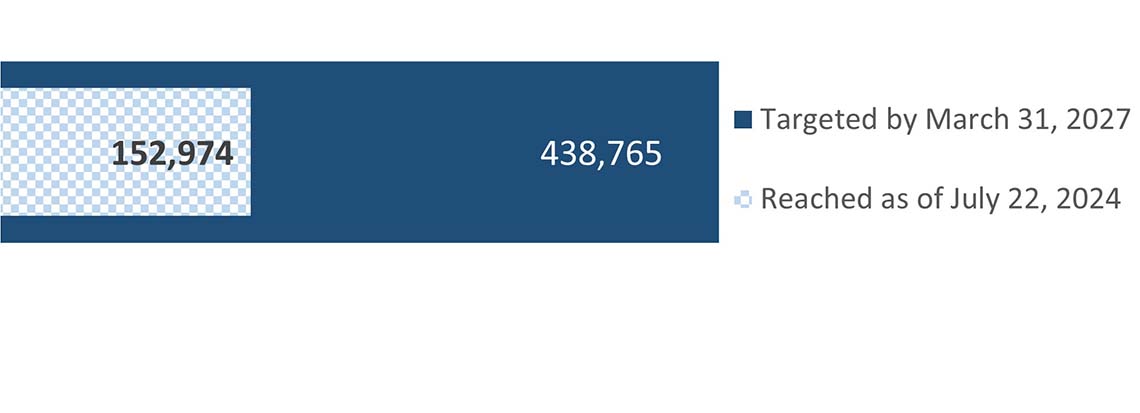
Number of households targeted and reached via high impact projects
- Target: 438,756 households by March 31, 2027
- Reached: 152,974 households as of July 22, 2024
Rapid Response Stream largely implemented
| RRS | Number | Value |
|---|---|---|
| Applications | 605 | $577M |
| Recipients | 203 | $196M |
The RRS experienced delays, and the completion target date was extended from March 31, 2022, to December 31, 2023.
As of July 2024, 98% of the 75,045 targeted Canadian households were reached, including all 9,941 targeted Indigenous households. There remained only around 1,000 targeted households (in Ontario) that had not yet been reached.
98% of Canadian households targeted via the RSS reached as of July 22, 2024.
Progress on the overall portion of targeted households reached by the UBF
The UBF had a target of reaching 800K households by March 31, 2027. As of July 2024, UBF projects had reached 33% of households targeted, including 15K Indigenous households (22% of Indigenous households targeted). A large share of the recipients surveyed (69%) reported that they had significant uptake of the Internet services for their completed UBF projects (at least 50% of their targeted subscribers were reached). Quebec was the first province where 100% of households had access to high-speed Internet. The Government of Quebec was provided with most of its UBF funding directly for its Operation High Speed project. Most households remaining were in Ontario (245K) and Alberta (107K).
Figure 15: Total number of households targeted and reached

Total number of households targeted and reached
- Targeted: 800,000 households by March 31, 2027
- Reached: 264,000 households as of July 22, 2024
Figure 16: Number of Indigenous households targeted and reached

Number of Indigenous households targeted and reached
- Targeted: 68,000 by March 31, 2027
- Reached: 15,000 as of July 22, 2024
As of July 2024, there remained 2.66 years left in the UBF funding period to reach the remaining two-thirds of the households targeted. About 77% of funding ($2.5B/$3.225B) had been allocated to projects (with a call for expressions of interest open for Manitoba, Saskatchewan, and Alberta), 11% of projects were still under negotiation, and 40% were under construction.
Figure 17: UBF Funding timeline elapsed

UBF Funding timeline elapsed
- Beginning of UBF funding period: April 1, 2020
- Number of years elapsed in funding timeline to date: 4.7 years as of July 22, 2024
- End of UBF funding period: March 31, 2027
UBF project infrastructure scalable beyond 50-10 Mbps
91% of UBF funding was allocated to scalable infrastructure, which exceeded the initial target of 85%. Seventy-nine percent of scalable infrastructure projects used Fibre technology, and as such, most of the UBF targeted households will be capable of accessing broadband speeds in the future at a level significantly higher than the current target of 50/10 Mbps.
Finding 10
Progress has been slow on the UBF's mobile connectivity objectives for Indigenous communities, with only one community reached.
Progress on mobile connectivity objectives
- 88% of First Nations Reserve areas had LTE network coverage as of December 31, 2022
- 58% of First Nations Reserve areas had 5G network coverage as of December 31, 2022
The evaluation found that that there had not yet been significant progress on mobile connectivity projects. Some interviewees believed that there were insufficient incentives for ISPs to undertake the mobile projects, as they often do not lead to new subscribers since improvements in mobile coverage mostly target roads between communities.
The UBF's target is to reach 25 Indigenous communities with LTE network or better mobile wireless services by March 31, 2027.
60 communities were targeted by 10 mobile stream projects, as of July 2024. The funding for these projects comprised a total of $28.7M out of the $50M allocated. However, the program reported that only one community had been reached as of January 2024.
Interviews revealed that one large ISP pulled out of most of their mobile projects (18 out of 20 projects). Of the $50 million allocated to cellular through the UBF, $40 million of that was allocated to BC through these 20 projects. It was said that a large reason why those projects were withdrawn was because of a lengthy approval and negotiation process with ISED and a lack of a business case to support the maintenance costs of the infrastructure, given that many of the projects would not generate any new mobile customers, as well as other challenges (e.g., location of the cellular towers).
Finding 11
ISED's previous broadband program, Connect to Innovate (CTI), made significant progress on its connectivity objectives, and was complementary to the UBF, as it targeted backbone infrastructure. Consequently, the CTI program, along with the UBF and other federal and P/T broadband programs, have contributed to reducing the connectivity gap, with underserved households reduced by 45% from 2020 to 2023.
Progress on the Connect to Innovate program objectives
The Connect to Innovate program, launched in 2015 prior to the UBF, also funded projects to bring improved Internet speeds to rural and remote communities in Canada.
The program committed $585 million to improve connectivity in rural and remote communities by 2024.
The CTI program was complementary to the UBF. While the UBF program primarily targeted last mile infrastructure, the CTI program supported new "backbone" infrastructure to connect institutions like schools and hospitals. A smaller portion of the CTI funding was also provided for upgrades and "last-mile" infrastructure to households and businesses.
As of March 31, 2024, for the original CTI program targets, the program had reached 110% of communities; 69% of Indigenous communities, 72% of households, and 75% of anchor institutions.
Figure 18: Connect to Innovate Program Targets

Connect to Innovate Program Targets
| Performance indicator | Targeted | Reached |
|---|---|---|
| # of rural and remote communities with access to high-capacity infrastructure | 975 | 1,069 |
| # of Indigenous communities with access to high-capacity infrastructure | 190 | 131 |
| # of rural and remote households with access to broadband services | 390,000 | 281,673 |
| # of anchor institutions connected to high-capacity networks | 1,200 | 899 |
Overall portion of underserved households reached
At the launch of the UBF program in January 2021, there were 1.54M households without 50/10 Mbps service. As of December 31, 2023, the combined impact of UBF, CTI and other federal and P/T programs had reduced this gap to 847K households and 95.8% of Canadian households had access to 50-10 Mbps Internet speeds, although only 59.7% of Canadian households were subscribed to these services.
Figure 19: Percent of Canadian households with access and subscriptions to 50-10 Mbps service

Percent of Canadian households with access and subscriptions to 50-10 Mbps service
| Year | Availability of 50-10 Mbps service | Subscriptions to 50-10 Mbps service |
|---|---|---|
| 2019 | 87% | 35% |
| 2020 | 90% | 44% |
| 2021 | 91% | 49% |
| 2022 | 94% | 56% |
| 2023 | 96% | 60% |
As of December 31, 2023, 60% of First Nations reserve areas had access to 50-10 Mbps service. Since the launch of the UBF, an additional 21% of households were reached in these areas.
Figure 20: Availability of 50-10 Mbps service to First Nations Reserve areas

Availability of 50-10 Mbps service to First Nations Reserve areas
| Year | Availability of 50-10 Mbps service |
|---|---|
| 2019 | 35% |
| 2020 | 39% |
| 2021 | 43% |
| 2022 | 50% |
| 2023 | 60% |
The evaluation found that ISED was developing a last mile premise strategy to meet the target of 100%, including the use of next-generation satellite technologies for the hardest-to-reach communities.
Finding 12
Administrative costs were within expected levels, but the UBF's program expenditures were significantly less than planned, in part due to the length of time required to assess proposals and negotiate agreements as well as various external factors that delayed ISP implementation of their infrastructure. As a result of these delays, the cost of many projects increased, which was challenging for those recipients.
UBF expenditures less than planned due to delays
UBF expenditures for the first four years were significantly less than budgeted, with only 45% of the amount having been spent ($839M/$1.852B). The variance was due to the time required to assess proposals and negotiate Contribution Agreements as well as other factors such as extreme weather events, the COVID-19 pandemic, sub-contractor availabilities, and permitting delays. The UBF also launched in the first year of the COVID-19 pandemic, where competition for staff was high – thereby taking longer to ramp up staff levels. Grant and Contribution (G&C) funds were reprofiled to later years and lapsed operating expenditures were reallocated to other departmental priorities. Interviewees noted that this was normal for an infrastructure program, where funding tends to get pushed out to later years.
Figure 21: G&C budget and actuals
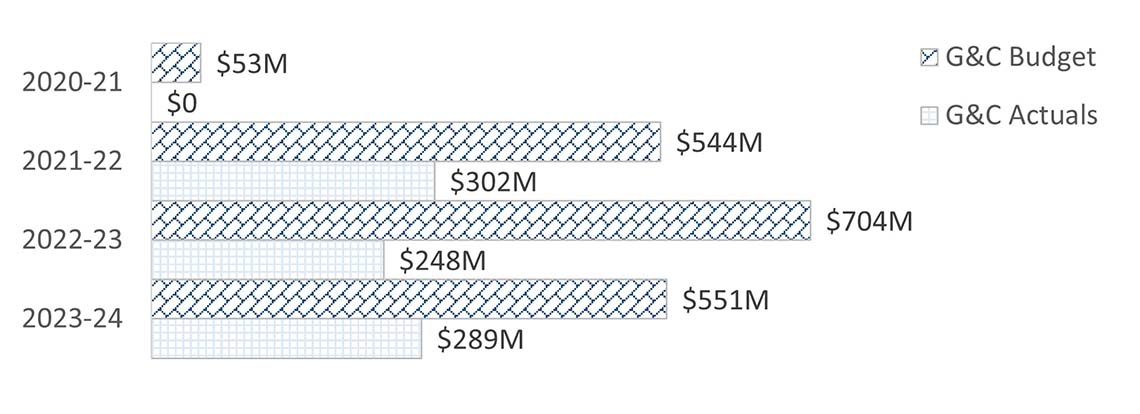
G&C budget and actuals
| Fiscal Year | G&C Budget | G&C actuals |
|---|---|---|
| 2020-21 | $53 million | $0 |
| 2021-22 | $544 million | $302 million |
| 2022-23 | $704 million | $248 million |
| 2023-24 | $551 million | $289 million |
Interviewees noted that the cost to deliver many UBF projects was much higher than expected due to the lengthy project approval process, high levels of inflation, and changes to project scope (e.g., more homes being added).
Figure 22: Connectivity cost per household

Connectivity cost per household
- Total project costs: $9,256
- Total UBF Funding: $3,121
- UBF Funding Used: $2,636
Case study highlight
The project is facing significant cost pressures stemming from COVID-19, supply-chain shortages, and inflation. The recipient indicated that project costs have increased by about 60%. It was noted that if more money is required, the UBF still has unspent funds, and so it could be an option for some recipients. However, adjusting the funding agreement was viewed as being very difficult by the recipient. The recipient noted that they were bearing the entire cost increase, with no adjustments in the funding expected from ISED. Consequently, the recipient noted that a funding model where the cost-related risks are shared equally was the preferred model which they want to use for future government projects.
Administrative costs as a % of overall budget
Program data shows that the projected administrative costs as a % of the overall budget were expected to be 3.7% over the duration of the UBF funding period (2020-21 to 2026-27), based on the planned expenditures (after funding reprofiles). For expenditures-to-date (2020-21 to 2023-24), the administrative cost ratio was 6.2%. Planned operating expenditures are expected to decrease, while G&C expenditures are expected to increase, in the latter years of the program, as more projects enter the construction phase.
Figure 23: Connectivity cost per household

Connectivity cost per household
| Fiscal Year | Planned or Actual Expenditures | Administrative Cost Ratio |
|---|---|---|
| 2020-21 | Actual | Not applicable – no G&C expenditures |
| 2021-22 | Actual | 5% |
| 2022-23 | Actual | 7% |
| 2023-24 | Actual | 6% |
| 2024-25 | Planned | 4% |
| 2025-26 | Planned | 2% |
| 2026-27 | Planned | 1% |
Finding 13
A significant amount of non-federal funding was leveraged for UBF funded projects. Recipients indicated that the UBF was a catalyst for the receipt of funding from other government programs and found the UBF to be effective in partnering to maximize broadband Internet access impacts.
A large share of non-federal funding was leveraged
The evaluation found that UBF funding was essential in leveraging P/T funding. Having both federal and P/T funding available also helped improve the business case for ISPs.
Overall, relative to the $2.5B in UBF funding that was allocated, there was $3.3B in non-federal funding leveraged, which included the applicants' contributions, P/T funding, other private funding, and municipal funding. There was also $1.5B leveraged from the Canada Infrastructure Bank.
Figure 24: Project funding by source

Project funding by source
| Funding Source | Funding amount |
|---|---|
| CIB Funding | $1.5 billion |
| Non-federal funding | $3.3 billion |
| UBF Funding | $2.5 billion |
| Total Project Funding | $7.4 billion |
For every dollar of UBF funding there was $1.34 in non-federal funding leveraged. The core stream had a higher amount of funding leveraged ($1.40) relative to the RRS stream ($0.69) and mobile stream ($0.68). The highest funding leverage ratios were in PEI ($9.17), British Columbia ($2.64), and New Brunswick ($1.98).
Figure 25: Funding leveraged by stream
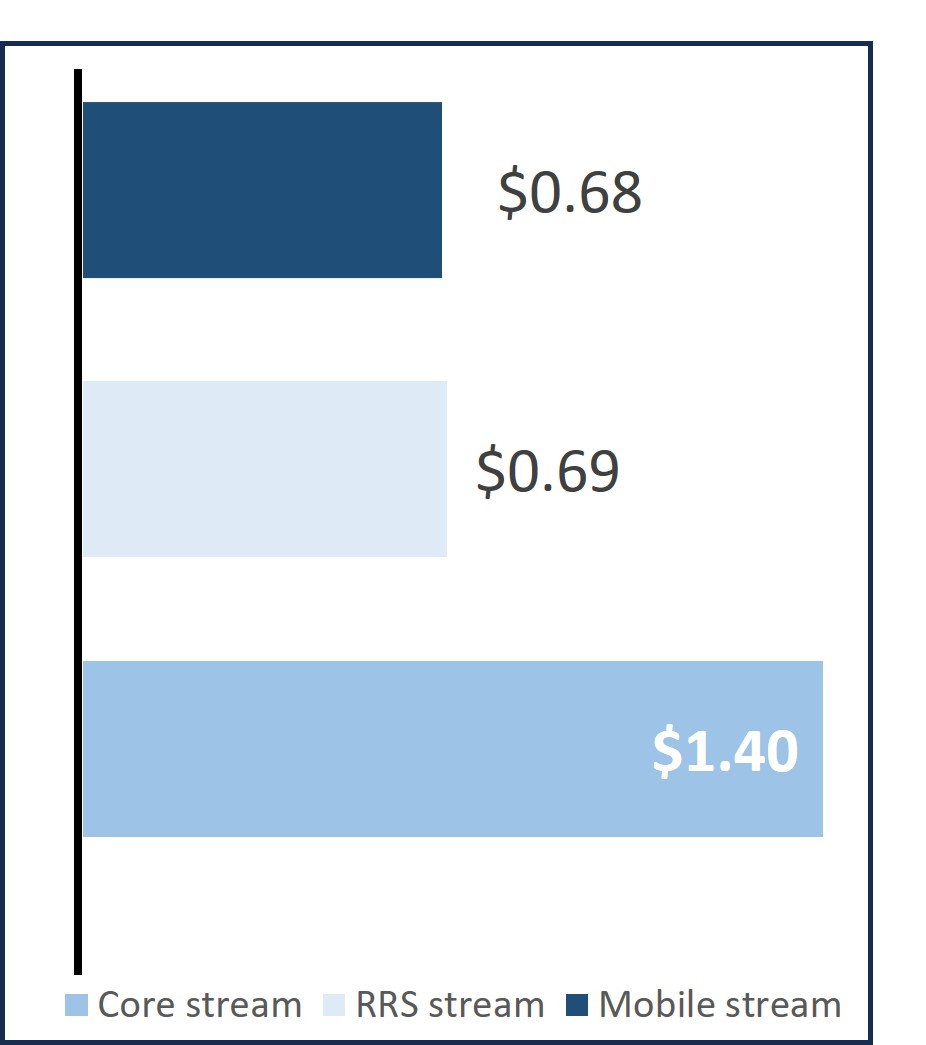
Funding leveraged by stream
| Funding Stream | Leveraging Ratio |
|---|---|
| Mobile stream | $0.68 |
| RRS stream | $0.69 |
| Core stream | $1.40 |
UBF was a catalyst for other funding sources
In total, 43% of recipients surveyed reported that the receipt of UBF funding had a moderate or significant influence on their ability to obtain funding from one or more funding sources, with 21% citing federal programs and 18% citing P/T funding programs. Compared to small ISPs, a higher share of medium and large ISPs reported that the receipt of UBF funding had a moderate or significant influence on their ability to obtain funding from one or more funding sources.
Figure 26: Influence of UBF funding on recipients ability to obtain funding from other sources

Influence of UBF funding on recipients ability to obtain funding from other sources
| Funding Source | All Organizations | Small ISP (1-99 FTEs) | Medium and large ISPs (100-500+ FTEs) |
|---|---|---|---|
| Other federal programs | 21% | 42% | 37% |
| Provincial/territorial programs | 18% | 27% | 13% |
| Municipal programs | 4% | 4% | 6% |
The majority of surveyed recipients perceived the UBF as effective or more effective than other broadband programs at partnering to maximize Internet access impacts (from 41% to 73%, depending on the program). Large ISPs rated the UBF more positively, with about three quarters perceiving the UBF as effective or more effective than other federal programs compared to only half of the small ISPs.
Figure 27: Effectiveness of UBF compared to other government broadband funding programs, at partnering to maximize Internet access impacts to underserved areas

Effectiveness of UBF compared to other government broadband funding programs, at partnering to maximize Internet access impacts to underserved areas
| Other government broadband funding program | All Organizations | Small ISP (1-99 FTEs) | Medium and large ISPs (100-500+ FTEs) |
|---|---|---|---|
| Other federal programs | 58% | 75% | 49% |
| Provincial/territorial programs | 54% | 47% | 52% |
| Municipal programs | 50% | 38% | 53% |
Summary
Conclusion
The UBF was effective in filling the need to connect rural and remote communities to broadband Internet services. Ecosystem partnerships have enabled the UBF to efficiently reach a large volume of households across Canada. While the UBF experienced initial challenges processing the large volume of applications and ISPs also experienced implementation challenges, there was significant progress in reaching underserved households. However, it will be critical for the UBF to remain vigilant and proactive in monitoring and mitigating program delivery and project implementation challenges to ensure that the projects are completed within the funding timeframe of March 31, 2027.
Finding 1
At the launch of the UBF, rural and remote communities lacked adequate broadband access, with service levels far below the 50/10 Mbps standard, and the Internet is characterized by slower speeds, less availability, and higher costs. A need for government intervention was confirmed because connecting these communities was not economically viable for ISPs.
Finding 2
Responsible for Canada's 2019 Connectivity Strategy, ISED plays a key role in facilitating ecosystem partnerships and focusing federal government efforts to address connectivity challenges in a consistent manner. As a key program under the Connectivity Strategy, the UBF contributed to the facilitation of effective partnership activities and coordination with P/Ts and other government departments, thereby mitigating duplication and overlap.
Finding 3
Recipients and other stakeholders were satisfied with the tools and support provided by the UBF, although satisfaction was somewhat lower among smaller ISPs. Many of these applicants used the Pathfinder services, but awareness of these services was low among recipients surveyed.
Finding 4
The UBF utilized a two-phase approach to engage Indigenous stakeholders, first working with key representatives, then via Crown-Indigenous reconciliation processes such as the Duty to Consult. Since each Indigenous community has unique preferences, the engagement approach should be adaptive to each community.
Finding 5
The application and approval process was slow, especially in the early days of the program, due to a high volume of applications, insufficient program personnel, pandemic impacts, and program complexities. The delays impacted the business case and feasibility of some projects due to cost increases and more condensed timelines.
Finding 6
The mapping process for underserved households was complex and contained inaccurate information.
Finding 7
Many recipients were satisfied with the Contribution Agreement and public announcement processes. Some concerns were raised regarding the flexibility of the Terms and Conditions, use of parallel bilateral agreements, and how the public announcement process was managed.
Finding 8
While most recipients were satisfied with the claims and reporting processes, some concerns were identified with the length/frequency of the claims process and level of requirements of the reporting process.
Finding 9
Due to the complex nature of their projects, recipients experienced a variety of implementation challenges which were largely outside of the UBF program's control. There has been progress in reaching underserved households in Canada with 50/10 Mbps Internet services. There are two years left to reach the remaining 67% (533K) of households targeted by the UBF, as program funding is set to end by March 31, 2027.
Finding 10
Progress has been slow on the UBF's mobile connectivity objectives for Indigenous communities, with only one community reached.
Finding 11
ISED's previous broadband program, Connect to Innovate (CTI), made significant progress on its connectivity objectives, and was complementary to the UBF, as it targeted backbone infrastructure. Consequently, the CTI program, along with the UBF and other federal and P/T broadband programs, have contributed to reducing the connectivity gap, with underserved households reduced by 45% from 2020 to 2023.
Finding 12
Administrative costs were within expected levels, but the UBF's program expenditures were significantly less than planned, in part due to the length of time required to assess proposals and negotiate agreements as well as various external factors that delayed ISP implementation of their infrastructure. As a result of these delays, the cost of many projects increased, which was challenging for those recipients.
Finding 13
A significant amount of non-federal funding was leveraged for UBF funded projects. Recipients indicated that the UBF was a catalyst for the receipt of funding from other government programs and found the UBF to be effective in partnering to maximize broadband Internet access impacts.
Recommendations
Recommendation 1
ISED's Connected Canada Branch should explore, for both current and future broadband programming, approaches to reduce geographic overlap between project proposals and explore approaches to enhance validation processes to ensure underserved areas in the recipients' project proposals are accurate.
Recommendation 2
ISED's Connected Canada Branch should explore, for both current and future broadband programming, approaches to reduce the complexity of the reporting processes and further streamline bilateral contribution agreements to improve alignment.
Appendices
Appendix A: Acronyms
- AEB
- Audit and Evaluation Branch
- CIB
- Canada Infrastructure Bank
- CRTC
- Canadian Radio-television and Telecommunications
- CTI
- Connect to Innovate
- FTE
- Full-Time Equivalent
- G&C
- Grant and Contribution
- ICT
- Information and communications technology
- ISC
- Indigenous Services Canada
- ISED
- Innovation, Science and Economic Development Canada
- ISP
- Internet Service Provider
- Mbps
- Megabits per second
- MoU
- Memorandum of Understanding
- OAG
- Office of the Auditor General
- OGD
- Other government department
- P/T
- Provincial/territorial or provinces/territories
- RRS
- Rapid response stream
- UBF
- Universal Broadband Fund
Appendix B: Other federal broadband programming
Canada Infrastructure Bank
The Canada Infrastructure Bank allocated up to $3 billion in low-cost and flexible, repayable financing and investment for large scale broadband infrastructure over 10 years. The CIB supports larger broadband projects on the margins of commercial viability.
CRTC – Broadband Fund
In 2019, the CRTC launched the Broadband Fund to help connect rural, remote, and Indigenous communities across Canada. The Broadband Fund was provided $750 million over five years to support projects to build or upgrade infrastructure to provide fixed and mobile wireless broadband Internet service to underserved Canadians.
Housing, Infrastructure, and Communities Canada – Investing in Canada Program
Under the program, over $33-billion in funding is being delivered through bilateral agreements between Housing, Infrastructure and Communities Canada and each of the provinces and territories. The program has four streams: Public Transit, Green Infrastructure, Community, Culture and Recreation Infrastructure, and Rural and Northern Communities Infrastructure. The Rural and Northern Communities stream supports projects that increase access to more efficient and reliable energy sources, improved physical conditions of community infrastructure, and improved internet connectivity for rural and northern communities.
Indigenous Services Canada – First Nation Infrastructure Fund
The program was provided with $4.3 billion over 4 years, starting in 2021-22, to improve the quality of life and the environment of First Nations communities by addressing the long-standing infrastructure gaps on reserves in eight project categories, including connectivity. The connectivity infrastructure category provides support for under-connected First Nations in accessing regional broadband network expansions or other rural telecommunication projects. The fund provides up to $10 million per recipient for capital projects involving retrofitting, construction, replacement, expansion, or purchase and installation of fixed assets or infrastructure.
Appendix C: Logic model
The logic model provided below serves as the UBF's roadmap. It outlines the immediate outcomes, the intermediate or medium-term outcomes, and the ultimate outcome.
Figure 28: Logic model

Logic model
Immediate Outcomes
- Potential applicants are aware of the UBF program requirements
- Eligible applicants submit quality applications
- Scalable infrastructure is funded through broadband infrastructure projects (i.e., speeds beyond 50/10 Mbps)
- Rapid response stream projects will offer improved Internet access (e.g., faster speeds, higher capacity, improved affordability)
- High impact projects that will bring 50/10 Mbps service to households in rural and remote areas are funded
These immediate outcomes are expected to lead to the following Intermediate Outcomes:
- Households in rural and remote areas, including Nunavut, have access to high-speed Internet at 50/10 Mbps
- Indigenous communities have a mobile Internet connection / enhanced mobile connectivity
These intermediate outcomes are expected to lead to the Ultimate Outcome:
- Canadians have the opportunity to participate in the digital economy
Appendix D: Methodology
The evaluation was based on five data collection methods, including qualitative and quantitative sources.
To address the evaluation questions, information from multiple lines of evidence was collected and triangulated.
Document and literature review
The document and literature review was conducted to assess program delivery; explore the need for funding to extend household access to high-speed connectivity; examine overlap with similar programs; and look at the application, negotiation and funding processes.
Program administrative and performance data review
This evaluation component included the analysis of program performance data such as Dashboards, Status Reports, and administrative data sources; financial and administrative data such as data on project applications and funding; and information on service standards.
Online survey of UBF recipients
AEB undertook an online survey of firms/organizations which received UBF funding to obtain information regarding their views on the efficiency of the application, negotiation, and funding processes, and to obtain information on some performance outcomes. In total, 136 UBF recipients responded to the request for information, resulting in a response rate of 42%.
Case studies
AEB conducted six case studies of UBF-funded projects, with a focus on the efficiency of the program processes and administration. Projects for the case studies were selected in consultation with the UBF program.
Virtual interviews
A total of 21 interviews were conducted using MS-Teams across the following stakeholder groups to gather diverse perspectives on the relevance, performance and efficiency of the UBF:
- ISED management (5)
- Provincial/Territorial government officials (12)
- Representatives from other federal government departments (4)
Appendix E: Challenges and mitigations
The evaluation encountered two limitations and evaluators applied related mitigation strategies.
Maturity of UBF
Challenge: The intermediate outcomes and ultimate outcome for the UBF have targeted completion dates of 2026 and later and were therefore beyond the scope of the evaluation.
Mitigation: For these outcomes, the evaluation measured only interim progress in achieving these targets.
Measuring attribution of UBF
Challenge: There are many other connectivity initiatives via ISED and other federal programming, and many provinces are providing a significant amount of co-funding. Although it was challenging to quantify the exact impact of UBF funding, the UBF was generally the largest contributor to meeting the connectivity targets.
Mitigation: The specific impact of UBF funding was explored in more detail with project partners.
Appendix F: Key terms
- Anchor institutions
- Facilities located in eligible transport communities that provide a public service (e.g., schools, medical facilities, libraries, community halls, First Nations band offices, or other institutions around which a community is formed) or that provide community residents with direct access to broadband Internet access services (e.g., telecommunications service providers that provide residential, business, or mobile services; Internet cafes; etc.).
- Backbone infrastructure
- Backbone infrastructure is the modern equivalent major highways — it connects communities across Canada to each other. Backbone infrastructure does not connect directly to households. It is often fibre optic-based but can comprise a range of technologies including microwave and satellite service.
- Broadband
- Broadband is an always-on, high-speed Internet connection. Broadband can be delivered over a variety of technologies, such as DSL, fibre optic, cable, fixed wireless, or satellite technologies.
- Fibre optic
- Fibre optic cables carry Internet signals over glass filaments to provide fast connections. Fibre is also used as backbone infrastructure to move large amounts of data to and from communities.
- Fixed wireless
- Fixed wireless networks use radio transmitters with elevated antennas (like towers) to communicate with customers within range. Fixed wireless networks are typically used with permanently-mounted antennas at the client sites.
- Households
- a person or group of persons who occupy the same dwelling.
- Large enterprise
- Large businesses are businesses with 500 employees or more.
- Last Mile
- Last-mile infrastructure can be compared to local roads and driveways — it brings Internet access from the backbone infrastructure (the highway) to households or small businesses through wired or wireless technologies, such as cable, digital subscriber line (DSL), fixed wireless or satellite. A portion of Connect to Innovate program funds support "last-mile" connectivity projects to households, at speeds of at least 5 Megabits per second (Mbps), where gaps continue to persist.
- Medium enterprise
- Medium-sized businesses are businesses with 100 to 499 employees.
- Satellite technology
- Customers use a dish antenna and transceiver to establish two-way communication with a satellite. Satellite can also be used as backbone to provide service to communities where terrestrial connections are not possible.
- Small enterprise
- Small businesses are businesses with 1 to 99 employees.