
Launched in February 2025 as part of the Government of Canada's Advisory Council on Artificial Intelligence, the Safe and Secure AI Advisory Group will ensure the Government of Canada and the Canadian Artificial Intelligence Safety Institute (CAISI) are well informed on risks associated with AI systems, and how to address them.
The Advisory Group will work closely with CAISI to establish research priorities and engage in ongoing work towards the effective regulation and governance of risks emerging from the development and deployment of AI systems across the economy.
On this page
Member biographies
Yoshua Bengio
Chair, Safe and Secure AI Advisory Group
Member of the Advisory Council on AI
Scientific Director, Mila
Full Professor, Université de Montréal
Yoshua Bengio is Full Professor of Computer Science at Université de Montreal, as well as the Founder and Scientific Director of Mila and a Canada CIFAR AI Chair. Considered one of the world's leaders in Artificial Intelligence and Deep Learning, he is the recipient of the 2018 A.M. Turing Award, considered like the "Nobel prize of computing". He is also the most cited computer scientist worldwide.
Professor Bengio is a Fellow of both the Royal Society of London and Canada, an Officer of the Order of Canada, a Knight of the Legion of Honor of France, a member of the UN's Scientific Advisory Board for Independent Advice on Breakthroughs in Science and Technology and chairs the International AI Safety Report.

Jeff Clune
Professor, University of British Columbia
Jeff Clune is a Professor of Computer Science at the University of British Columbia, a Canada CIFAR AI Chair at the Vector Institute, and a Senior Research Advisor at DeepMind. Jeff focuses on deep learning, including deep reinforcement learning. Previously he was a research manager at OpenAI, a Senior Research Manager and founding member of Uber AI Labs (formed after Uber acquired a startup he helped lead), the Harris Associate Professor in Computer Science at the University of Wyoming, and a Research Scientist at Cornell University. He received degrees from Michigan State University (PhD, master's) and the University of Michigan (bachelor's). Since 2015, he won the Presidential Early Career Award for Scientists and Engineers from the White House, had two papers in Nature, one in Science, and one in PNAS, won an NSF CAREER award, received Outstanding Paper of the Decade and Distinguished Young Investigator awards, received two Test of Time awards, and had best paper awards, oral presentations, and invited talks at the top machine learning conferences (NeurIPS, CVPR, ICLR, and ICML). His research is regularly covered in the press, including the New York Times, NPR, the New Yorker, CNN, NBC, Wired, the BBC, the Economist, Science, Nature, National Geographic, the Atlantic, and the New Scientist.
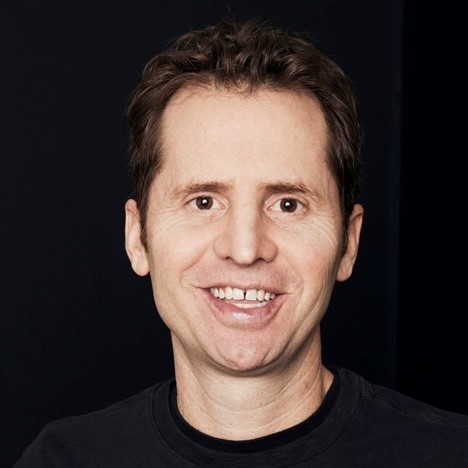
David Duvenaud
Associate Professor, University of Toronto
David Duvenaud is an Associate Professor in Computer Science and Statistics at the University of Toronto. He holds a Sloan Research Fellowship, a Canada Research Chair in Generative Models, and a CIFAR AI chair. He has over 50 publications in machine learning and artificial intelligence. His postdoc was done at Harvard University and his Ph.D. at the University of Cambridge. He is a Founding Member of the Vector Institute for Artificial Intelligence. He recently spent 1.5 years at Anthropic, leading their Alignment Evaluations team, contributing to their Responsible Scaling Policy, and leading research projects on jailbreaks and sabotage. He's also a co-director of the Schwartz Reisman Institute for Technology and Society, a director of the AI Safety Foundation, and has been an advisor to Cohere. He has also received a Google Faculty Award, and best paper awards at both the Neural Information Processing Systems (NeurIPS) conference and the International Conference on Machine Learning (ICML).

Golnoosh Farnadi
Assistant Professor, McGill University
Dr. Golnoosh Farnadi is an Assistant Professor at the School of Computer Science at McGill University and an Adjunct Professor at University Montréal. She is a visiting faculty researcher at Google, a core academic member at MILA (Quebec Institute for Learning Algorithms) and holds Canada CIFAR AI chair since 2021. She is a co-director of McGill's Collaborative for AI & Society (McCAIS), and the founder of the EQUAL (EQuity & EQuality Using AI and Learning algorithms) lab at Mila / McGill University. Dr. Farnadi's contributions have been acknowledged with prestigious awards, including the Google Scholar Award and Facebook Research Award in 2021. She has also received a Google award for inclusion research in 2023 and was recognized as a finalist for the 2023 Women in AI Responsible AI Leader of the Year award. Dr. Farnadi's commitment to advancing ethical AI practices has also earned her recognition as one of the 100 Brilliant Women in AI Ethics in 2023.

David Lie
Professor, University of Toronto
David Lie is a Professor and Tier 1 Canada Research Chair in Secure and Reliable Systems at the University of Toronto's Department of Electrical and Computer Engineering. He is director of the Schwartz Reisman Institute, which explores interdisciplinary research to develop transformative technologies like AI for the betterment of society. Additionally, he is an Associate Director at the Data Sciences Institute, Vector Faculty Affiliate, and Senior Fellow at Massey College, as well as appointments in the Department of Computer Science and the Faculty of Law. David is a prominent researcher, known for his groundbreaking work on the XOM architecture, a precursor to modern trusted execution processor extensions such as Intel TDX and SGX, and AMD SEV. His work on XOM earned him a best paper award at SOSP. He also developed the widely-used PScout Android Permission mapping tool, which has been downloaded over 10,000 times and cited in dozens of subsequent papers. Furthermore, David has served on numerous program committees, including OSDI, Usenix Security, IEEE Security & Privacy, NDSS, and is technical program committee chair of ACM CCS from 2024-2025.
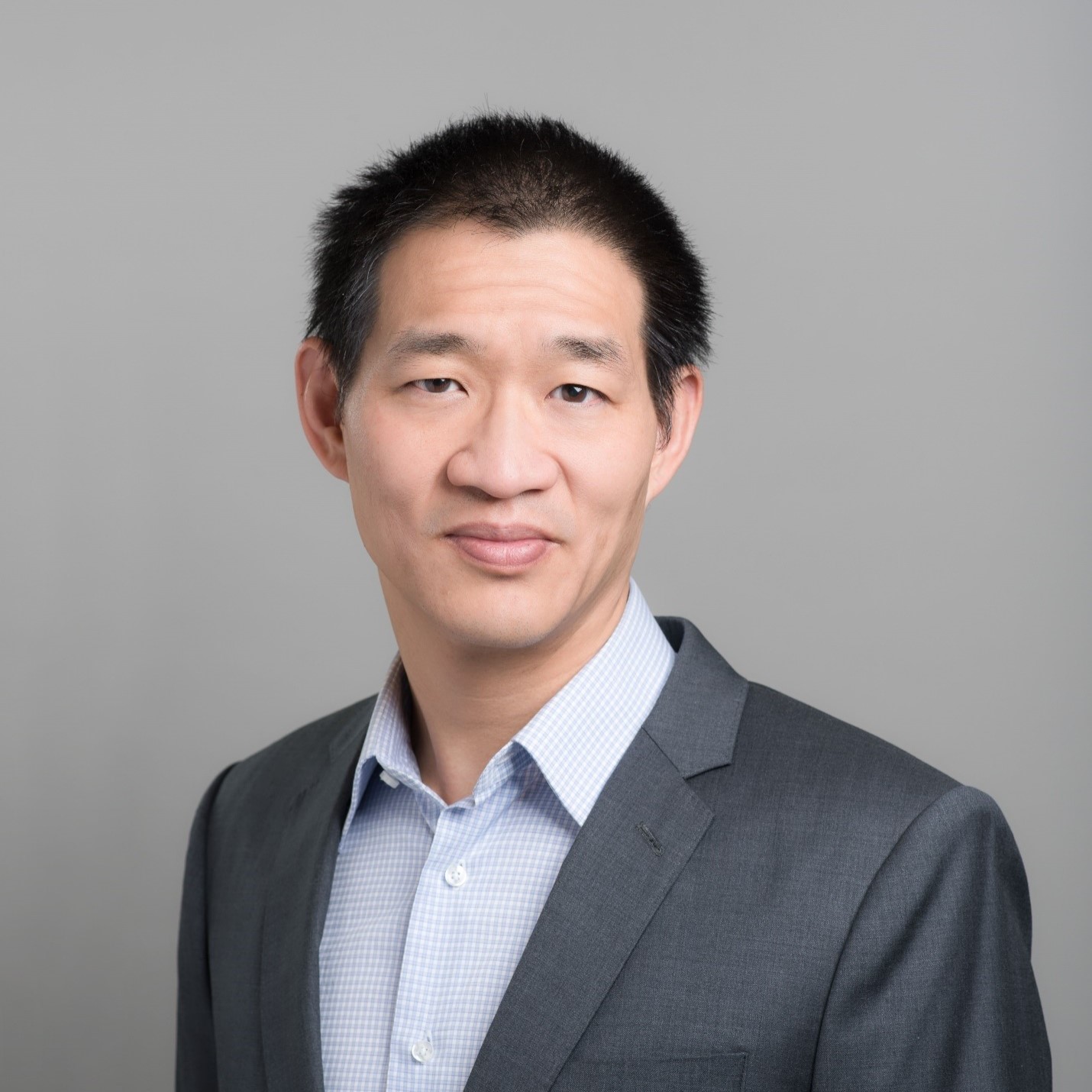
Deval Pandya
Vice-President and Head of AI Engineering at the Vector Institute
Dr. Deval Pandya is a recognized leader in AI and applications in energy transition and climate. He is the Vice-President and Head of AI Engineering at the Vector Institute, where he works in enabling, amplifying and applying AI breakthroughs. He holds an expert position at the UN Economic Commission of Europe – Task Force for Digitalization in Energy, He is passionate about innovation and advises multiple startups, VC and incubators. Previously, he was founding member of Data Science CoE and Machine learning Leader for Assets and New Energies at Shell. His recognitions include Future Energy Leader by World Energy council, Peak's emerging technician leader in Canada, Top AI Executive by Canada India Tech Council and one of the Top 100 Global AI innovators by World Summit AI.

Joelle Pineau
Professor, McGill University
Joelle Pineau is a core member at Mila and a Professor at the School of Computer Science at McGill University, Montreal, Canada. She is also the VP, AI Research at Meta, leading its Fundamental AI Research (FAIR) team, with labs across Canada, US and Europe. She holds a BASc in Engineering from the University of Waterloo, and an MSc and PhD in Robotics from Carnegie Mellon University. Dr. Pineau's research focuses on developing new models and algorithms for planning and learning in complex domains. She also works on applying these algorithms to real-world problems in robotics, healthcare, and conversational agents. She is a recipient of NSERC's E.W.R. Steacie Memorial Fellowship (2018), the Governor General's Innovation Awards (2019), a CIFAR Canada AI (CCAI) chairholder, a Fellow of the Association for the Advancement of Artificial Intelligence (AAAI), and a Fellow of the Royal Society of Canada (RSC).
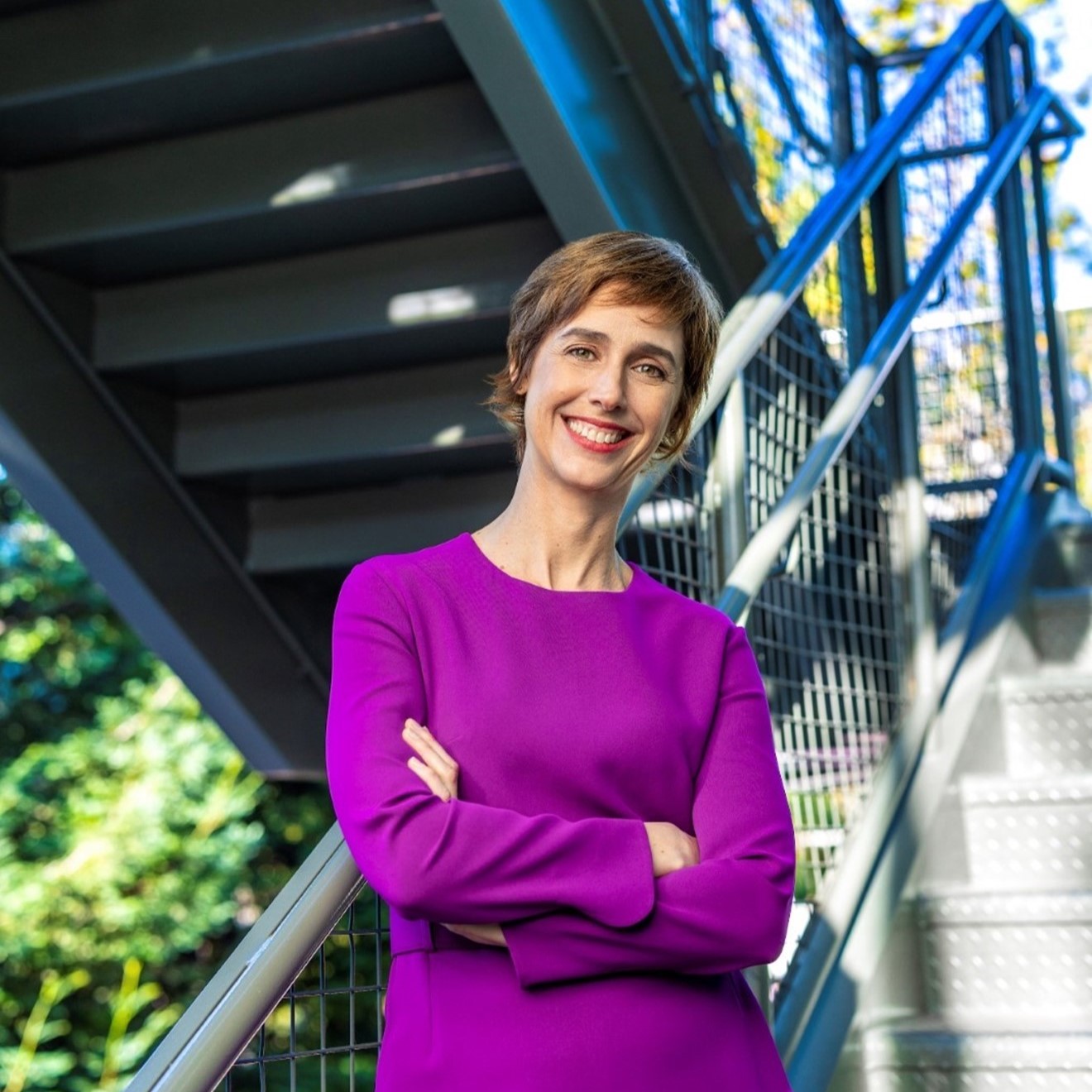
Deborah Raji
Academic Fellow at the Leadership Conference on Civil and Human Rights
Inioluwa Deborah Raji is an Academic Fellow at the Leadership Conference on Civil and Human Rights, and was formerly a Senior Trustworthy AI Fellow at the Mozilla Foundation. She has worked closely with industry, civil society and within academia to push forward various projects to operationalize ethical considerations in machine learning practice, and push forward benchmarking and model evaluation norms in the field. In particular, she aims to study how model engineering choices (from evaluation to data choices) impact consumer protection, product liability, procurement, anti-discrimination practice and other forms of legal and institutional accountability related to functional harms. She is on the advisory boards for the Center for Democracy and Technology AI Governance Lab, the Health AI Partnership, REALML and the Center for Civil Rights and Technology.
For her efforts, she has been named to Forbes 30 Under 30, MIT Tech Review 35 Under 35 Innovators and the TIME 100 Most Influential in AI. She is also the recipient of the 2024 Tech For Humanity Prize, and the 2024 Mozilla Rise 25 award, as well as the co-recipient of the EFF Pioneer Barlow Award with Joy Buolamwini and Timnit Gebru. She received her Bachelors of Applied Science in Engineering Science from the University of Toronto. She is currently completing her PhD in computer science from the University of California, Berkeley.
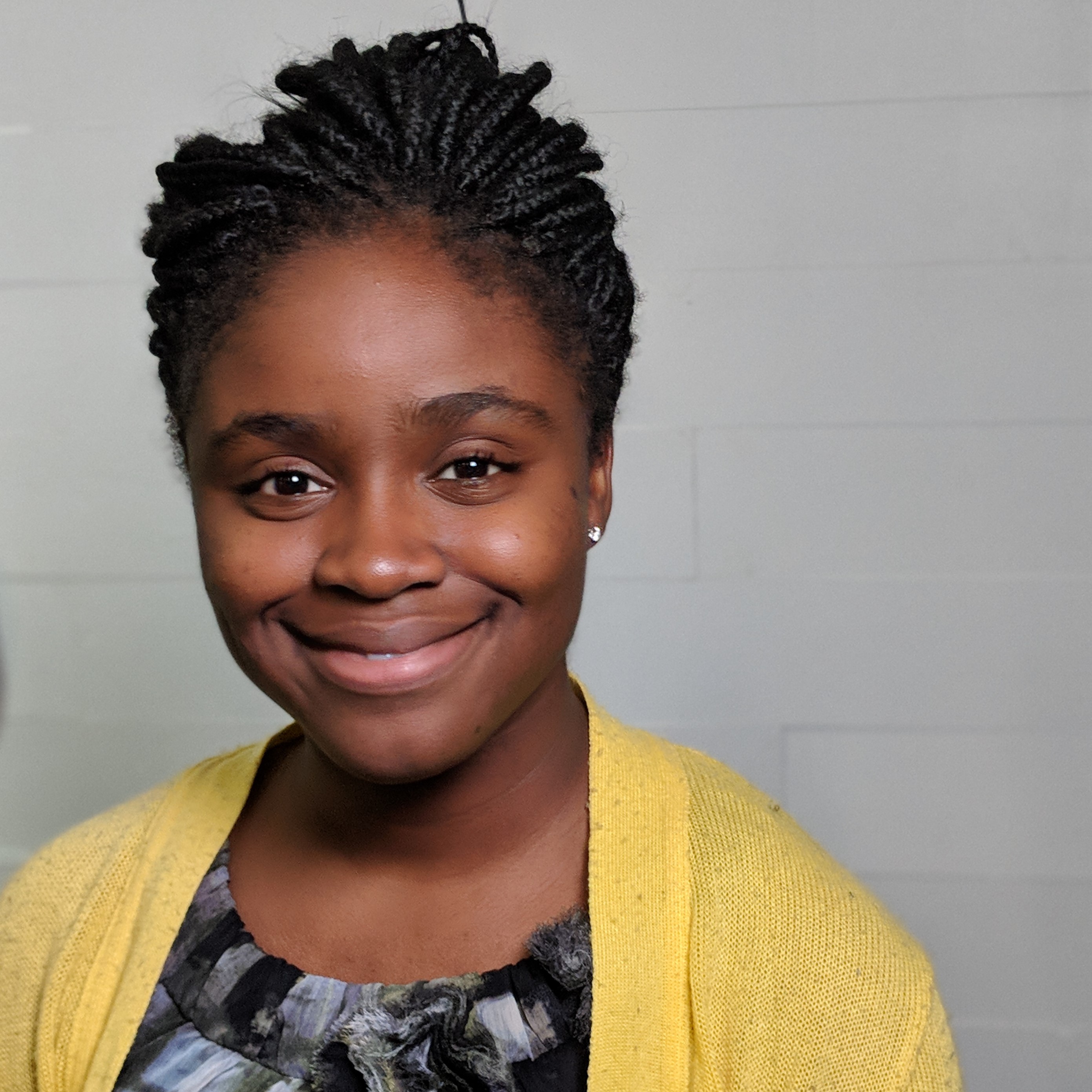
Elissa Strome
Executive Director of the Pan-Canadian Artificial Intelligence Strategy at CIFAR
Elissa Strome is the Executive Director of the Pan-Canadian Artificial Intelligence Strategy at CIFAR. She works with leaders at Canada's three National AI Institutes in Edmonton (Amii), Montreal (Mila), and Toronto (Vector Institute) and across the country to advance Canada's leadership in AI research, training and innovation. She is a champion of equity, diversity and inclusion in science, and an ambassador for Canada's position in AI research, innovation, and policy internationally. Elissa is a member of the federal government's AI Advisory Council, a member of the OECD's Network of Experts on AI and Expert Group on AI in Health, a member of the Health Canada Expert Advisory Committee for AI in Health, and sits on the Advisory Board of York University's Centre for AI & Society. Her strong leadership and support of women and gender-diverse people in STEM has been recognized by a Special Jury Recognition at the Women in AI Awards North America (2023) and the Womxn in Data Science Lifetime Achievement Award (2022).
Elissa completed her PhD in Neuroscience at the University of British Columbia. Following a post-doc at Lund University, in Sweden, she decided to pursue a career in research strategy, policy, and leadership. From 2008 – 2017 she held senior leadership positions at University of Toronto's Office of the Vice-President, Research and Innovation, advancing major institutional strategic research priorities, including establishing and leading the SOSCIP research consortium.

Adam White
Assistant professor, University of Alberta
Adam White is an assistant professor at the University of Alberta. He is the scientific director of the Alberta Machine Intelligence Institute, a principal investigator of the Reinforcement Learning and Artificial Intelligence group at the University of Alberta, and a Canada CIFAR Chair in Artificial Intelligence. Previously, Adam was a staff research scientist at Google Deepmind. Adam co-created the Reinforcement Learning Specialization, taken by over 95,000 students on Coursera.
Adam's research is focused on understanding the fundamental principles of learning in both simulated worlds and industrial control applications. His research program explores how the problem of intelligence can be modeled as a reinforcement learning agent interacting with some unknown environment, learning from a scalar reward signal rather than explicit feedback.
Adam's research group is deeply passionate about good empirical practices and new methodologies to help determine if our algorithms are ready for deployment in the real world. Adam has pioneered applications of reinforcement learning to real drinking and wastewater treatment plants and is the co-founder and Chief Scientist of RL Core Technologies, a startup applying AI and machine learning across industrial control.

Terms of Reference
1. Objective and Mandate
- The objective of the Safe and Secure Artificial Intelligence Advisory Group (the Advisory Group) is to ensure that the Government is well-informed on risks associated with artificial intelligence (AI) systems as they emerge and how to address them.
- The mandate of the Advisory Group is to advise the Minister of Innovation, Science and Industry and the Canadian AI Safety Institute (CAISI) on key issues in the field, including:
- The latest research on AI safety;
- Emerging risks due to advances in AI;
- The priorities of CAISI;
- Best practices and standards with regard to AI governance;
- International developments in AI governance or AI safety; and
- Any other matters of relevance to addressing risks due to AI.
- In carrying out its mandate, the Advisory Group may occasionally be asked to provide or contribute to reports or discussion papers. Such products will be approved by the Advisory Group and by Innovation, Science and Economic Development Canada (ISED) prior to publication.
2. Membership
- Composition and Tenure
- The Advisory Group will be composed of leading experts in Canada on AI governance, AI safety, and relevant fields, and will represent a diversity of regions, perspectives and experience, including members from Canadian industry, civil society, and academia.
- At least one member will be member of the Government of Canada Advisory Council on AI.
- The Advisory Group membership will be composed of individual members who will serve in a voluntary and personal capacity, and ex officio members who will serve by virtue of their professional role.
- Members will be appointed by the Minister of Innovation, Science and Industry.
- ISED may invite other individuals with particular expertise or representatives from other government departments or external organizations to attend meetings for specific topics or agenda items.
- Individual members will be appointed for a term of two (2) years, with the possibility of renewal for a further two-year term.
- Conflict of interest
- Individual members of the Advisory Group will serve and provide advice exclusively in a personal and voluntary capacity as knowledgeable individuals and in the best interests of Canadians. They may not represent their firms, organizations or professional affiliations, or use their positions for their own gain or that of any other person, company or organization.
- Ex officio members of the Advisory Group will serve and provide advice in their professional capacity, as knowledgeable individuals, and in the best interests of Canadians. They may represent the perspective and opinions of their organization but may not use their position for their own or their organization's gain, or that of any other person, company or organization.
- All members are required to avoid real, potential or apparent conflicts of interest, and are expected to recuse themselves on issues where necessary. A member's recusal from a discussion will be recorded in the meeting minutes.
3. Roles and responsibilities
- The chair of the Advisory Group will be selected from the Advisory Group membership and appointed by the Minister of Innovation, Science and Industry. The chair is expected to:
- Liaise between the members and ISED to establish and maintain a healthy environment for deliberation, dialogue and decision-making; and
- Participate in regular bilateral meetings with the Advisory Group Secretariat or the Deputy Minister in order to share information, coordinate the forward agenda and work of the Advisory Group, and provide any other support that may be required to fulfil the Advisory Group's mandate.
- ISED will serve as Secretariat to the Advisory Group, and may provide direction on the program of work:
- The Secretariat will work with the Advisory Group chair to develop and circulate the agenda and meeting materials, coordinate meeting logistics, coordinate any contractual arrangements, and organize the invitation of guests;
- The Secretariat will prepare summaries of meeting discussions that could be published on the Advisory Group web page;
- The Secretariat will carry out any other work needed to support the work of the Advisory Group, including performing research and preparing draft reports.
4. Frequency of meetings
- The Advisory Group will meet every 6-8 weeks or as required in order to respond to emerging policy or operational requirements.
- Meetings will be held by videoconference unless otherwise indicated.
5. Consultations and stakeholder engagement
The Advisory Group may conduct consultations or engagement processes with external stakeholders from industry, civil society, and academia and with Canadians in order to incorporate broader Canadian perspectives into the work of the Advisory Group.